
Filmography Worship: Ranking Every Barry Jenkins Film
Written by Andreas Babiolakis
Filmography Worship is a series where we review every single feature of filmmakers who have made our Wall of Directors (and other greats)
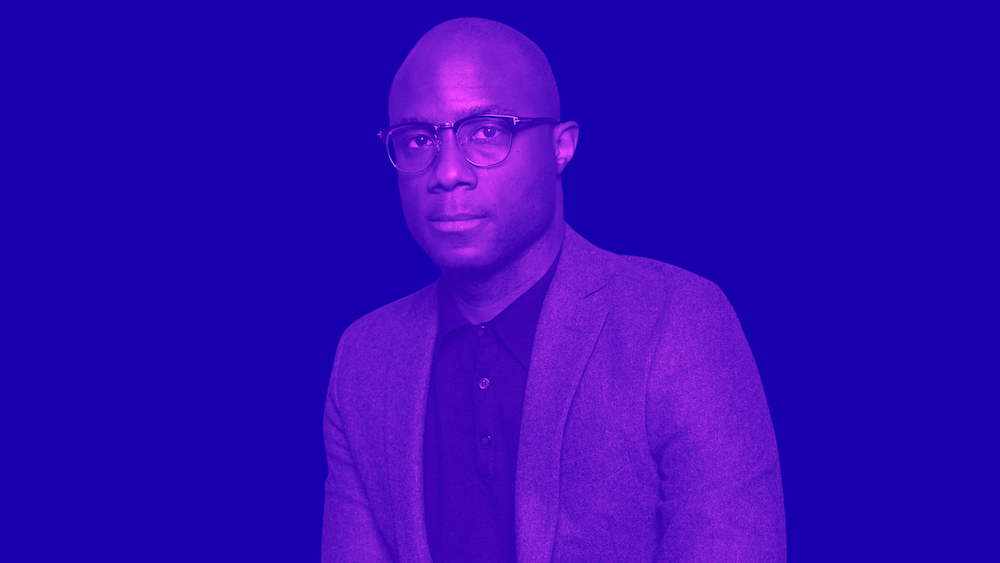
Barry Jenkins came from nothing. Born in Miami, Florida, he was one of four children to a single mom; he never knew his father. His mother was addicted to crack cocaine; he was raised by another, older woman who took him in when he needed guidance and help. His difficult childhood and constant isolation made his mind wander, and he would invent stories in his head. Jenkins pursued a film studies degree at Florida State University College of Motion Picture Arts and looked towards the cinematic guidance of aesthetic titans like Wong Kar-wai, John Cassavettes, Claire Denis, and Jean-Luc Godard, amongst many others. He moved to Los Angeles after graduating in order to pursue his dream of making motion pictures and wanting to be like his auteur, big-screen mentors. He worked for Oprah Winfrey’s Harpo Productions as a production assistant and started to second guess his career choices: there was nothing there that evoked the passion and magnificence of what he learned at film school and anticipated when he saw the greatest films. Trying to carve his own path and find that spark again, Jenkins created two short films: My Josephine, and Little Brown Boy. He would be his own teacher from this point on.
He would work towards his debut feature film with 2008’s Medicine for Melancholy. A beloved film in the independent film scene Medicine for Melancholy brought the then-popular mumblecore scene to San Francisco with tremendous results; it was clear that Jenkins was already on the right path. It would take eight additional years of screenwriting attempts, abandoned projects, and trial-and-error before a little film called Moonlight would come to fruition. Produced by Jenkins’ friend from FSU, Adele Romanski (a fantastic go-getter who has teamed up with Jenkins to help produce a few contemporary greats like Aftersun and All Dirt Roads Taste of Salt), Moonlight borrowed a lot from Jenkins’ personal struggles (his home dynamic, for instance) while adapting Tarell Alvin McCraney’s unpublished play In Moonlight Black Boys Look Blue (which was similarly autobiographical for McCraney). The rest was history. While winning Best Picture at the Academy Awards, Jenkins declared “Very clearly, even in my dreams this could not be true. But to hell with dreams! I'm done with it, because this is true.” I cannot help but reflect on the unfathomable childhood Jenkins had. He came from nothing and went on to become one of the most fascinating names in contemporary American cinema. He aspired to be one of the greats and became that, seemingly in one feature film (an instant classic).
Jenkins has devoted much time to producing and writing other projects, but his few feature films since Moonlight are just as ambitious as anything he has ever made. Specializing in stories of hardship within the Black community at different eras in history, Jenkins infuses a little of what he has learned from the directors he avidly watched; he found colourful, vibrant, nostalgic aesthetics from Wong, the brutal indie realism of Cassavettes, the metaphysical soul searching of Denis, and the shattering of the fourth wall of Godard (amongst other traits from other names). Jenkins has become his own household name with a signature style that blends race relation topics with retrospective yearning, magical realism (even a micro-dose of this in some films), and a floatiness that comes from soul searching, repairing one’s own heart, and — as Jenkins was accustomed to as a child — wandering minds. With a short-but-mighty filmography, Jenkins is someone I always look forward to seeing more from, no matter what the project is (yes, even the film I have placed in the fifth spot).
What he has brought to American cinema (as a director, writer, and producer) is immeasurable at this point. A highlight of my life as a cinephile was being able to ask him about his to-die-for music selection in his feature films at a TIFF premiere (being able to discuss Nina Simone with Jenkins will never leave me). To think that such a magnificent artist made all of this possible despite, again, starting off with nothing. To know that a rough start could have robbed us of this marvelous auteur if all of the stars didn’t align is a crying shame. Well, this is real. There’s no point in pontificating. To Jenkins’ point, “to hell with dreams.” This is true. His work will be the guidance for many other walks of life who seek it; his works sure have aided me when I have needed the catharsis, empathy, and understanding. Here are the feature films of Barry Jenkins ranked from worst to best.

5. Mufasa: The Lion King
Of course, it should come as no shock that Mufasa: The Lion King would be in last place here. What may surprise you, however, is that I do not think this is that bad of a film. Jenkins feels held back by Disney’s dependency on tethering this film so heavily on its source material (this is essentially a prequel to Jon Favreau’s live-action [so to speak] adaptation of The Lion King, which was not a great film by any means). When Disney allows Jenkins to cook, you get some glimpses of gorgeous magical realism that render this established franchise a bit of a metaphysical exploration. Once we cut back to the sing-along sequences and one-liner duds, Mufasa flounders as one would expect. I feel like Jenkins said “yes” to this project in order to be able to self-fund more projects down the line, and a lot of directors have had to do this in the day and age where studios and producers are not interested in medium-budgeted motion pictures. The fact that Mufasa is even watchable and not completely awful feels like Jenkins pulling off a miracle; I do have to say that Mufasa being clearly Jenkins’ least interesting film feels like Disney holding him back (we all expected this).

4. Medicine for Melancholy
It goes without saying that the rest of this article will deal with excellent films that I highly recommend. Jenkins’ debut film, Medicine for Melancholy, is a day in the life of a fleeting romance: two Black millennials who find solace and similarities between each other in a San Francisco that they feel distanced from. Almost like Jenkins’ answer to Richard Linklater’s Before Trilogy, Medicine for Melancholy has us clinging to captivating conversations and two hearts trying to test the waters with one another. Jenkins uses his shoestring budget to let the art of strong storytelling lead the way, while proving that having an expert eye can make even lower-end cameras capture breathtaking shots. If Jenkins’ best works have inspired people to become cinephiles, Medicine for Melancholy may make you realize that becoming a filmmaker is possible (as long as you have the passion, drive, and raw talent for it); films like Medicine for Melancholy are evidence of achievable cinematic aspirations.

3. If Beale Street Could Talk
How the hell does someone follow up Moonlight? It wasn’t too difficult for Jenkins because — believe it or not — he was working on adapting James Baldwin’s If Beale Street Could Talk before he worked on Moonlight; the latter was a means of helping him find his footing with how he wanted to adapt Baldwin’s novel. It was released only two years after Moonlight and, to me, a spiritual successor aesthetically. If Moonlight was shot to feel like the urge to find escapism in the present, then If Beale Street Could Talk is the reflection on history via aching memories. A pregnant woman and her family try to prove her partner’s innocence when he was wrongfully framed by a racist police officer. Jenkins blends flashbacks with the present to show how far our central couple has come (and — at the hands of bigotry — how far they have to go). If Beale Street Could Talk was Jenkins’ Tusk if Moonlight is his Rumours: it had the disservice of following in the footsteps of a masterful achievement. However, like the Fleetwood Mac double-album Tusk, I feel like If Beale Street Could Talk will get its flowers in the future when a new generation doesn’t use Moonlight as an unrealistic expectation and, instead, see Moonlight and want to explore even more; If Beale Street Could Talk is an excellent followup.

2. The Underground Railroad
This is technically cheating, but there is no way that I cannot discuss The Underground Railroad when the topic at hand is Barry Jenkins. Jenkins has directed for television before, but his sole creation is this miniseries which, honestly, feels more like a ten-hour film split up into chapters. An adaptation of the novel of the same name by the tremendous author Colson Whitehead, The Underground Railroad is an eviscerating look at slavery with flourishes of magical historical realism, godly aesthetics, and punishing storytelling. This miniseries — as far as I am concerned — is ridiculously underrated; of course it has received loved from certain circles and critics, but this is one of the greatest televised moments of recent memory (it has the high potential of being rediscovered in the future, but I think that it deserves its adoration now; the Criterion Collection releasing the project is a great start). Jenkins takes an atrocious chapter in American history and creates a titanic allegory of generational trauma, cyclical corruption throughout civilization, and spiritual awakening amidst adversity. This is why Jenkins took six years between If Beale Street Could Talk and Mufasa: this massive undertaking is worth the time and the discovery, and the fact that this miniseries isn’t continuously discussed saddens me because it is a masterpiece of the small screen (and what you can achieve within television). Watch even just the first minute of The Underground Railroad and tell me that I am wrong.
1. Moonlight
Growing up, Jenkins was inspired by other auteurs to make motion pictures. At the Canadian premiere of Moonlight at the Toronto International Film Festival, a patron in the audience wanted to gush about the film to Jenkins during the Q&A after the film. It didn’t take long for folks to realize that the new super fan was none other than acclaimed director Jonathan Demme. Already, Jenkins was inspiring an already-established great. It’s easy to see how. Moonlight is the kind of film that you remember exactly when and where you first saw it; for me, it was my second dating anniversary with my now-fiancée, and it was at the Varsity Cineplex downtown Toronto. I remember walking out of the cinema and walking through side roads to our dinner destination, and neither of us could stop discussing this monumental film that we had just watched. You’ll know fairly quickly when you have watched a new favourite, but the most special kind of films — instant masterpieces — are the ones that you know have forever changed cinema for you. To me, there’s cinephilia before seeing Moonlight and after seeing it.
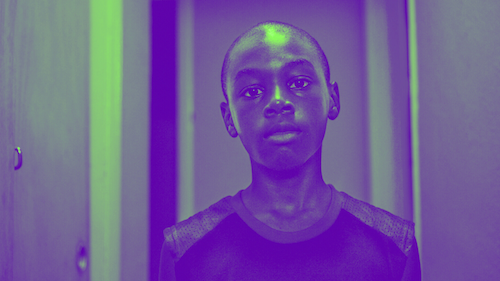
Split into three chapters, Moonlight follows a trio of stages in Chiron’s life. Chiron is a Black child in Miami with a crack-addicted mother and a lack of a father figure (Jenkins’ vulnerability is indescribable with this film: what a difficult conversation he has with himself through his art here). Chiron is also gay and closeted because of the violent stigmatization and homophobia that surround him. Everyone around him struggles, from his main mentor (father figure Juan who is the drug dealer that supplies crack to Chrion’s mother), to Chiron’s friend and crush Kevin (who also deals with bullying and peer pressure). This is Liberty City: a part of Florida that the world turns a blind eye in hopes that it will wither and disappear; these are real people who will not back down. In the meantime, much of Moonlight is about Chiron’s life being dictated by his circumstances, and not being able to achieve quite what he would have hoped for himself given his hardships (in ways, by making a feature film, Jenkins is negating the potential life of hopelessness that could have been; his cinematic embrace of his characters is his way of assuring the community of his youth that everything will be okay, and that the world will not shun Liberty City any more).
As of the release of this article, Moonlight is around ten years old. I don’t think it is too early to call it one of the greatest motion pictures of all time; I felt this way that evening I first saw it. Despite all of the tribulations in Liberty City, Jenkins shoots Miami with beautiful, cool hues (purples, blues, violets, browns). He emphasizes the songs that ripple through the streets and establishments. The beach is a Shangri-la. Jenkins still finds the brilliance of where he grew up. Hell, he shows that same appreciation with the kinds of people he grew up with. Despite their flaws and troubled ways, Jenkins captures these Black lives with love and care, with an effort to still preserve the culture, spark, and jubilation that he wishes to remember alongside the misery of living in an environment where all of the odds are stacked against you. Moonlight is about self discovery, even in the form of a hidden identity as a means of protecting oneself from additional devastation. Moonlight is a crushing film that is equal parts majestic and harrowing. Jenkins takes real sociopolitical concerns, the confessions of countless lives, and his conflicted experiences and memories, and renders then exquisite with poetic fragility, aesthetic mastery, nostalgic comfort, and fearlessness. It remains Barry Jenkins’ magnum opus, and one of the best films of the American experience that you will ever find.


Andreas Babiolakis has a Masters degree in Film and Photography Preservation and Collections Management from Toronto Metropolitan University, as well as a Bachelors degree in Cinema Studies from York University. His favourite times of year are the Criterion Collection flash sales and the annual Toronto International Film Festival.