
Grand Theft Auto VI and Rockstar Games' Quest for Cinematic Video Games
Written by Andreas Babiolakis
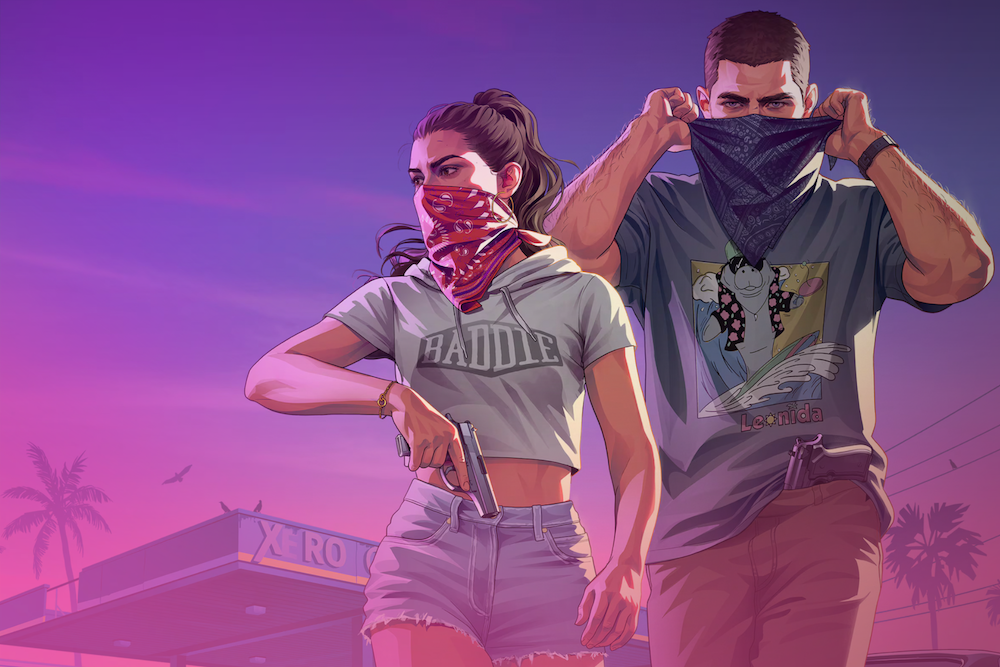
Who here is ready for Grand Theft Auto VI? That might not be the first thing that you expect to read on a film-related website, but the anticipation for this video game has been insurmountable (not to put it so lightly). Rockstar Games' coveted game has been in the works for over a decade, and tomorrow will finally be the day that those "we got X before GTA6" memes can be put to rest. In fact, the wait for this game has been so long that the former stigmas — that these games corrupt the masses, entice people to become violent or belligerent, or that they brainwash the youth of today (who, quite frankly, have a bigger parenting problem than they do a video game problem) — have since been replaced with a community-wide celebration; sure, I've already seen some imps implying that this game will damage the minds of those who play it, but these voices are far more quiet than they ever were. To say that Grand Theft Auto VI is one of the biggest cultural moments of the year is an understatement. It only makes sense that I would reflect on this moment a little bit.
However, I cannot just arbitrarily bring up this video game for no rhyme or reason on what is — again — a film-centred website. For me, a major reason why I am so excited is because of Rockstar Games' permanent affiliation with cinephilia: a major reason why I believe that the majority of their video games have proven to be influential in the grand scheme of things. It is clear that the various creatives of Rockstar from over the years are film buffs, and you can see their passion from the miniscule to the innovative. There are many clear signs, many of which are easter eggs that are proliferated throughout their games. A personal favourite of mine is the oil field named Plainview in Red Dead Redemption: an obvious tribute to the greedy character Daniel Plainview in Paul Thomas Anderson's There Will Be Blood. You don't have to try hard to find many such references, including the abandoned drug deal from No Country for Old Men being findable in Grand Theft Auto V, or the hazy, silhouette-heavy cinematography of The Assassination of Jesse James by the Coward Robert Ford being a staple of key sequences in Red Dead Redemption 2 (I assure you that Rockstar staffers are familiar with films outside of 2007 as well). I could go through each and every reference throughout their games, but this is a topic that has been brought up many times in the past by dedicated treasure hunters who have dug up far more than I ever could.
The point remains that Rockstar games are made with cinema as a reference, and it goes back to the early days of their breakthrough; let us focus on the Grand Theft Auto series first. I know that the earliest Grand Theft Auto games will be dear to the hearts of quite a few of you, but the reality of the situation is that the first two official games (and London 1969) may have sold decently, but they were far from being considered strong titles. Their design was influential, sure, but their impact felt more pivotal within the explorations of sandbox gaming and taboo themes than anything else, especially narrative capabilities (these preliminary games were more about what you could do as a gamer, versus what Rockstar could do as mavericks). Then comes the first turning point for the franchise, Grand Theft Auto III, which I would still insist is not quite as cinematic as what would come, and a major reason why is the muteness of playable protagonist Claude. A common trait in video games is to have a silent lead character so that your internal thoughts — or external reactions — can be the characterizable imprint intended for players to feel as though they are one with the game. Grand Theft Auto III was a massive upgrade, leaping from 2D to 3D environments and gameplay, and the sandbox, open world possibilities taking quite the leap from the previous iterations as well.
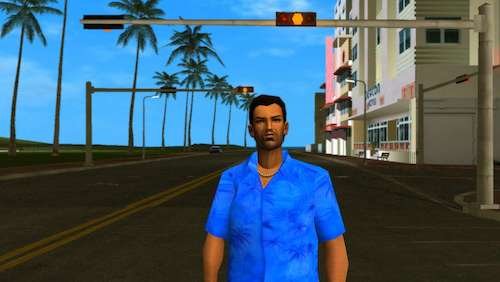
Grand Theft Auto: Vice City
It was the follow-up game, Vice City, that I would consider the first truly cinematic entry of the franchise. There are the many influences — from Brian De Palma's Scarface and Martin Scorsese's Goodfellas, to the television series Miami Vice and other eighties-based crime works. Sealing the deal for its time (the formative video game years of the early aughts) is the casting of Ray Liotta as protagonist Tommy Vercetti; unlike III's Claude who didn't mutter a word, Tommy was highly vocal, and he would narrate and accompany the majority of one's playthrough. This was truly his story, and you were either along for the ride or were Tommy himself; Vice City works both ways. With the neon aesthetics and fixation on recreating the lush beauty of the criminal underworld found in the aforementioned references, Vice City felt like a film or series that you were playing, expanding far past the goal of making the ultimate game (Rockstar wanted this as well, but — like other developers around this time and the nineties before — the use of video games as an artform and narrative conveyance was being explored more completely). Vice City was cinematic in its style and nature.
Then came San Andreas, which took the things that made Vice City great and went even further, either directly (expanding its scope and amount of missions) or indirectly (having a strong aesthetic that was drastically different than Vice City's pinks and blues — San Andreas was far grittier artistically). At this point, it was Rockstar's most narratively robust story at that point, planting us in the middle of character CJ's already-intense life after the shocking murder of his mother; his sinful past comes back to entwine him more than ever before. The sandbox capabilities are still here, but this time around, it felt like Rockstar was allowing you to create your own lore — or, in ways, cinema. You could choose which areas CJ could dominate (and become the head honcho of), and, thus, you weren't just mucking around when avoiding the main story: you were writing your own. While other sandbox games have always allowed you to spin your own tales, your choices left your mark in San Andreas, so your actions felt more official than ever before.
Things were a little different with Grand Theft Auto IV (which — full disclosure — is my favourite game of the series). This was the most mature game of the franchise (let's see if this remains true this time tomorrow), following ex-soldier Niko Bellic. This game was different, in the sense that you began with relatively normal mission requests (like Niko trying to get himself back on his feet once reuniting with his cousin, Roman) before your missions slowly get more and more dangerous and questionable; Niko's dark side gradually reveals itself. Unlike the instant plunge into sin city like the previous games, Grand Theft Auto IV — if you focused just on its story-based missions — has a heavy prioritization on character development and changes of heart. At the time, the game was one of the most expensive to produce (with a one-hundred-million-dollar budget), and it shook up the once prolific formula of Rockstar (from releasing three GTA games in a row, to the now-expected lengthy gestation processes for each new entry). The expansion of Niko's choices resulted in even larger consequences (whose relationships he would foster and nurture, whose requests he would ignore, and the like); this boiled down to the game's notorious double-ending selection (where Niko is damned either way; no ending is truly good, here, because Niko cannot outrun his demons). The cutscenes were more dynamic, the aesthetics were moodier and more mature, and even the physics of the game (down to the vehicle driving) felt more realistic, creating a bleaker Grand Theft Auto experience that was akin to the prestigious television dramas that were massive at the time (and, as you can surmise, cinematically inspired), including The Sopranos, The Wire, and The Shield (amongst others). For the first time in the franchise, crime was emotionally weighted, escapism felt real and consequential, and grime felt beautiful.
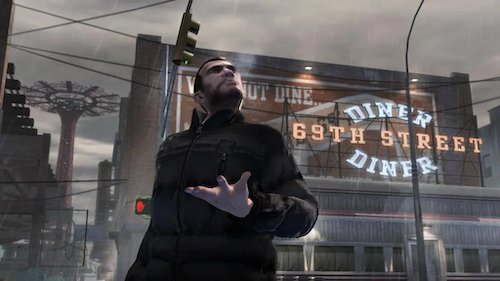
Grand Theft Auto IV
Rockstar eased off the pedal a little bit with Grand Theft Auto V (which was the most popular entry in the series, but I have a feeling that a certain game may have that beat tomorrow); when I say that, I mean that they made the series feel fun again (I haven't touched upon all of the IV-era offshoots like The Ballad of Gay Tony, which I highly recommend as well, but these games are certainly cut from the same cloth as IV is). That crushing style of the fourth official entry was replaced with a focus on satire and parody. Sure, you can still do anything that you want and your actions will affect the outcome of scenarios and certain storylines, but V wasn't nearly as damning or karmic as IV is. If anything, the game implores you to indulge in its bizarre world a little bit with its trio of protagonists, each based on a different kind of a Grand Theft Auto experience. There's Franklin, which reminded me the most of the narrative, suburban immersion of San Andreas (he feels the most like my kind of preferred play style: the focus on story). There's anarchistic Trevor, who mimics the sandbox possibilities of all that one desires (including — and especially — the absolute worst of humanity); I'd lump him in with the ways of the third official game and its championing of endless debauchery.
Then, there's Michael, who — to me — feels a bit more like what Vice City was centred around: that cinematic experience. The game begins with him, predominantly, and a heist that goes wrong; sure, Trevor is a part of this botched attempt, but we don't see Trevor for a little while after this opening scene. Additionally, the opening credits (in the cut to the "present" of the game) feature Michael setting the scene. He lives with his family under a new(ish) guise in Los Santos. While the other two characters also have rather interesting stories behind them, Michael's feels the most filmic — from the way that his character and backstory are showcased, to the missions that he partakes in. If anything, his character's obsession with film — down to becoming a film producer later on — is a testament to who his character is: a big screen character adapted for the video game world (now, granted, Michael as a producer also represents the bad side of the movie-making business, which I'm sure is no coincidence at all). I liked playing as Franklin above the other two characters, but I was narratively the most compelled by Michael's silly-yet-gripping story: one that felt like both a tribute to and a farce of Tony Soprano's very existence.
Video gamers are obsessed with the idea of higher framerates, and I can sometimes understand why. When I compare the movement, flexibility, and reaction time of my favourite two FromSoftware titles (Elden Ring and Bloodbourne), I can understand why one might be frustrated that the latter hasn't been remastered to have a higher framerate; when you are relying on split-second reaction times in highly fatal environments, speed is everything. However, maybe because I am a cinephile first and foremost, I am not under the impression that every video game ever made must have the highest possible frame rate. The actual reason why Rockstar games are not the highest frame rate possible is likely due to how much information is being processed at once in their massive and populated environments (that doesn't stop Elden Ring from being sixty frames-per-second, I guess). To me, a better reason why Rockstar games are locked at thirty FPS (like VI has already been confirmed to be) is because they are a few frames away from that cinematic-feeling twenty-four frames-per-second. To me, these games feel and perform so well when they feel filmic (as they are likely designed to be), as if you are a part of this ongoing motion picture that ends either when the credits roll or when you have bothered the wrong person (and your time is up). A higher framerate would lose this feeling, and I'm sure that wouldn't be a problem for some gamers; I just love what we currently have, personally.
Even though the Grand Theft Auto experience is more than enough to go off of, excluding other Rockstar titles that can apply here feels like a disservice. So, let us go back in time to unearth some other cinematic examples. For this next example, even though I would chalk up these games as being more of Remedy Entertainment's doing (another company that wears its filmic and television influences on their sleeves, and whose games I may cover in a future article), I would be remiss to not at least touch upon the Max Payne series and its translation of the action film physics found in The Matrix into a video game setting (besides its complete neo-noir emersion). This genre fixation is matched by the relatively underrated L.A. Noire: a full-on noir experience where you play a detective and have to read faces for tells and scrutinize crime scenes; going through every noir influence here would take an eternity. A bit of an outlier is 2006's Bully, but even this is stuffed with references (like tributes to lines from On the Waterfront, plot-based allusions to Back to the Future and The Warriors, and other even the use of Daniel LaRusso's Halloween costume from The Karate Kid), so even this counts even a little bit.
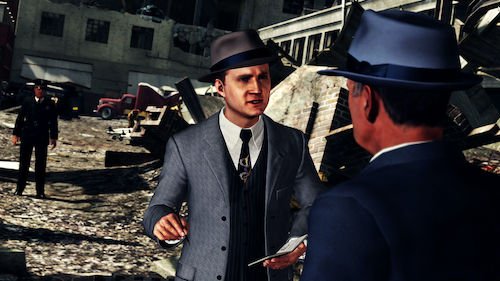
L.A. Noire
However, the two most cinematic Rockstar experiences — to me — have to be the two Red Dead Redemption titles (one cannot forget that Red Dead Revolver exists, mind you, but that game doesn't compare to what came after). Heavily based on westerns like Clint Eastwood's Unforgiven or Sergio Leone's Once Upon a Time in the West, both Redemption games are slow-burning crawls through the barren landscapes of the turning tides of the soon-to-be industrialized Americas (and — as a result — the glacial demise of the wild west). Whether you are playing as John Marston or Arthur Morgan in either of the two mainline games, you are bound to have a cinematic experience; from bombastic cut scenes and spaghetti-western-inspired score composition, to swirling narrative threads and cascading character arcs. The second game even has a cinematic mode, which you can trigger to turn any playable moment (ideally long passages of traversing the land by horse or foot) into a breathtaking montage from a film that you are creating in real time. The concept of creating these sequences is continued by each game having a stand-out, music-driven moment, where your protagonist is left alone in the middle of nowhere, with only an original song to accompany them and their guilt; I adore the late D'Angelo's "Unshaken" in Red Dead Redemption 2 and how heavily it feels like a transitional period from the second to the third act of a western epic.
Like the other games, to go through each of the cinematic references in the Red Dead series may take a lifetime, but I at least want to point out a couple, like how the snowy first chapter in the second game is a clear homage to Sergio Corbucci's The Great Silence (and how the western genre could be overtaken by a brutal winter to heighten themes of nihilism and existentialism), or the duelling sequences in the first game (mysteriously removed from the sequel, for whatever reason) are shot and paced to feel like they came straight out of The Good, the Bad, and the Ugly (the tension and anticipation shook me every time); you'll even find some High Noon adoration in these moments. What I love most of all is how most of these homages are not too forced; if you know where these images, names, or moments come from, then you can see how the Rockstar creatives felt inspired more than anything else. Next comes something a bit more deeply rooted in cinematic nerdiness: how well the Red Dead Redemption series handles the earliest days of cinema. From silent shorts to magic lantern shows, your character can attend some of the most primitive forms of going to the cinema (so to speak), and these moments are handled with grace and fondness, not mockery. Once you toss in the Undead Nightmare offshoot game for the first Red Dead Redemption, you have a whole group of other tributes to admire — from the clear zombie film tropes, to references to non-horror works like The Mask (and — believe it or not — even more western film celebrations, including High Plains Drifter and The Wild Bunch). In many ways, this series is a cinephile’s absolute dream — even more than the Grand Theft Auto games. Will that change when VI finally drops? We will see shortly.
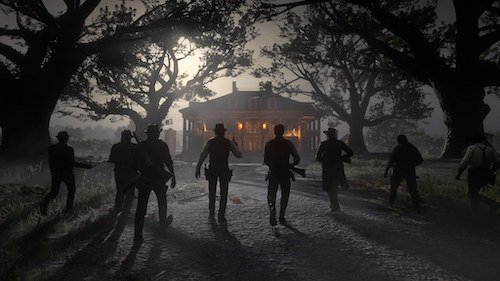
Red Dead Redemption 2
That isn't to imply that film and television is all that Rockstar are ever inspired by, seeing as their works are also indebted to literature, fashion, and whatever else permeates the zeitgeist. Don't even get me started on music, especially with how vital song selection and curation has been for the Grand Theft Auto series. It's safe to say that Rockstar games have always been aware of the culture around them. However, when video games moved from the arcade to the home, and when that console technology improved over the nineties, the capabilities of what video games could muster began to feel endless. I honestly believe that video games and films migrating to home theatres at roughly the same times created an eventual, conjoined experience of what could be enjoyed from the comfort of one's seat, and part of that stems from the video game medium feeling more like playable films or series (from obvious examples like Heavy Rain and Immortality, to in-between hybrids like The Last of Us and Alan Wake). With Rockstar, the bridge feels both intentional and blatant: part of their quest to make each game feel like an innovation is to push each entry past our contemporaneous understanding of what a video game is (and, sometimes, that means having their works dip in the pool of cinema along the way). With the release of Grand Theft Auto VI tomorrow, we return to the point where Rockstar Games first started making games that felt filmically stylized: Vice City (and, this time around, many more neighbouring cities). This feels like a full-circle moment for me: someone who first saw those retro colours and that Floridian backdrop when I was a teenager and playing this game via a download on my school laptop (oops). This past year has felt like the build-up to a major film from back when I was a kid in the nineties, so, when we finally load Grand Theft Auto VI, let's hope for one thing (as the kids would say): absolute cinema.


Andreas Babiolakis has a Masters degree in Film and Photography Preservation and Collections Management from Toronto Metropolitan University, as well as a Bachelors degree in Cinema Studies from York University. His favourite times of year are the Criterion Collection flash sales and the annual Toronto International Film Festival.