
Filmography Worship: Ranking Every Michael Haneke Film
Written by Andreas Babiolakis
Filmography Worship is a series where we review every single feature of filmmakers that have made our Wall of Directors

Austrian auteur Michael Haneke is rightfully decorated, with a slew of praise, awards, and disciples to his name. That is saying a lot when you consider how heavy the majority of his motion pictures are; I’d consider his oeuvre to be amongst the most intense in film history. His films deal with the moral conflicts of everyday Europeans (or, once, Americans), as they question their faith, society’s politics, their own mortality, and many other catastrophic quandaries. A truant in his youth, Haneke neglected his academics to indulge in his passion for film watching; he would become a critic and a television editor in his twenties and thirties. After directing for television, he would eventually turn to that same big screen that had inspired him throughout his salad days. Haneke was over forty-five years old when he released his debut feature film, The Seventh Continent; this career pivot saw Haneke leaping straight out of the gate with the punishing, depressing style that he would soon be the master of. Considering that he started his filmmaking career quite late and tends to take his time in between films, we still have twelve films that are mostly fantastic (outside of just one dud, which I will cover shortly).
For most of his career, Haneke made appearances at many of the awards ceremonies, including two Palme d’Or winning works at the Cannes Film Festival (as well as a slew of other prizes there), regular nominations at the César Awards, and many other ceremonies. Eventually, the BAFTAs and Oscars would follow suit by nominating Amour, but I — and many — would argue that Haneke was due a lot more attention than just for this one film. He has directed a handful of the greatest performances in recent memory (and at least two of the strongest performances of all time). His writing is just as powerful as his directing, as he crafts these unforgiving fables for adults who are maybe just as jaded as Haneke is with the state of things. Haneke allows film goers to confront their frustrations, dreads, and fears head on with his relentless pictures that never conform to expectations (down to outright breaking the rules of film, if needed). Yet, not once does Haneke feel anarchistic: his works feel almost prestigious with their risks, and it can be jarring how frequently his films are aesthetically enriching while his stories are horrifying. His consistency and mastery has rightfully made him one of the biggest names in international cinema. Here are the films of Michael Haneke ranked from worst to best.
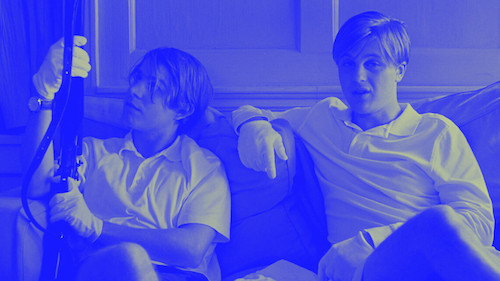
12. Funny Games (2007)
An identical, shot-for-shot remake of Haneke’s 1997 Funny Games (down to using the exact same jarring Naked City cuts to shake up the audience), the 2007 Funny Games just feels lifeless by comparison. I don’t blame Haneke for attempting this experiment since it was always his intention to have Funny Games be an American production (the film’s themes on violence, apathy, and abuse were meant to reflect on the ethical dilemma of Hollywood and citizens of the United States). However, this film just doesn’t work. The problem with shot-for-shot remakes is that you can just sense the soul being non-existent in the film, even if you cannot explain why. When an artist is focused more on matching what has already been made, this is an exercise in lining beats up and copying the mise-en-scene as closely as possible. The art of discovery and trial-and-error is gone, and, thus, the mystery that makes giant leaps feel so successful also dissipates. When I watch this version of Funny Games, it feels like — despite the best efforts of all of the talented people involved — I am experiencing the microwaved leftovers of a meal that just tasted better the night before (then again, I never thought too much of the original Funny Games either; more on that soon).
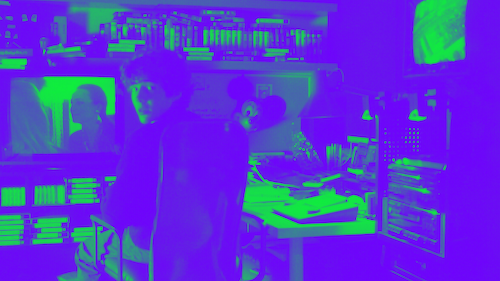
11. Benny’s Video
From this point on, I’d say that there is quite a leap in quality. Haneke’s second film is Benny’s Video: a study on a troubled teenager who is unable to disassociate from the violent motion pictures that he indulges in. A clear commentary on the accusations that films make people dangerous, Benny’s Video goes the extra mile with the shock value. Now, I admit that Haneke feels unrefined here with how much he is trying to upset or unnerve his audience (he would become a master of knowing the right ways to push viewers soon enough), so Benny’s Video is likely best left for the biggest fans of this auteur. With that in mind, I do think that seeing such a gritty, borderline vérité film by Haneke because it confirms that he is a brilliant storyteller (even without the pulpy sheen and deep aesthetics of his later works).
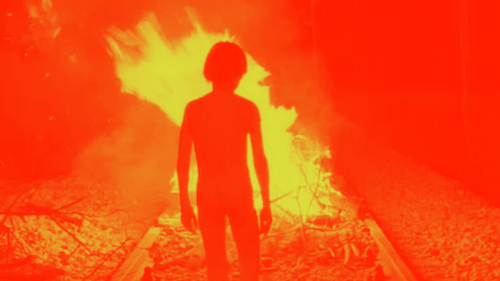
10. Time of the Wolf
Even though most Haneke films make the world feel like it is ending (while it is actually unassuming of what we are seeing), Time of the Wolf is a rare instance where Haneke is literally depicting a post-apocalyptic scenario. This is another case where he is trying a bit too much with this quest for comfort within purely distressing times, but I cannot argue against how stunning the film is (and how far he is willing to go with the kinds of dystopian themes that often tread the same ground). I would like to see Haneke revisit this kind of film with a bit more restraint and refinement in the future (then again, maybe modern times would match what this kind of film is stating far too closely, so would we need another reminder?).
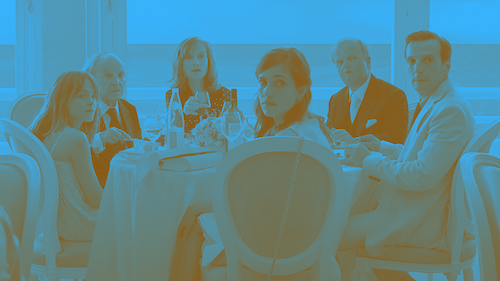
9. Happy End
It isn’t confirmed to be Haneke’s final film, but Happy End is indicating that it is in a number of ways (from, well, the ironic-yet-fitting title). Even though Haneke is trying to tell a deep and disturbed story about this complicated family, this feels more like a best-of compilation of his films all pooled together into a film that is Haneke 101 (while also not being the best place to start with his films because I would advise something far stronger). Still, should you have a Haneke itch that needs scratching, Happy End could be that extra film if you feel like you have run out of Haneke titles. It’s still interesting and challenging enough to warrant a discussion once you are done watching it, but I feel like it will be a brief conversation (as opposed to the lifetime of reflection that his greatest works warrant).
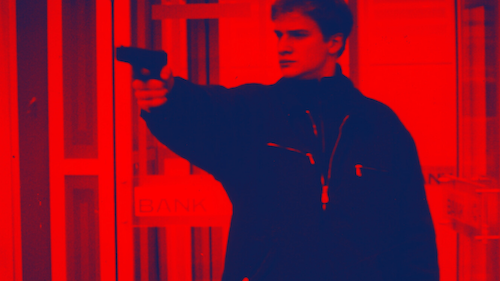
8. 71 Fragments of a Chronology of Chance
The films from this point on are at least quite great. Haneke’s third film is quite a tall order that reaps strong results. 71 Fragments of a Chronology of Chance is exactly what the name suggests: seventy-one short vignettes that originally seem pointless until you start to see each “fragment” connect in unexpected ways, leading up to a shocking event (as if to ask had any of these seventy events were different, would things have been different). Unlike anything else Haneke has ever made (and, for that matter, most other directors), this ambitious arthouse effort will have you thinking differently about filmmaking, life, and circumstance. I’d argue that even the individual clips feel arresting, even if we aren’t getting much information out of a particular sequence (this is the power of Haneke’s eye for cinema).

7. Code Unknown
While not nearly as intense conceptually as 71 Fragments of a Chronology of Chance, Code Unknown is similar enough to compare. We have a series of storylines that are far more fleshed out than 71 Fragments, but they, too, will connect in unexpected ways. Haneke was a far stronger director by the time he released Code Unknown (this is a testament to how well 71 Fragments works for what it is, I’d argue). With Code Unknown, it doesn’t feel like the world is out to get our protagonists; it instead seems that everything is fucked up; however, we are all united in our despair. This is a bit of an underrated Haneke cut that I recommend should you be trying to chase that high (or, well, considering this is Haneke we’re talking about, the lowest of lows with some depressing-ass cinema).
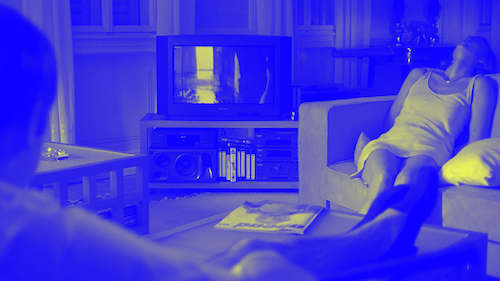
6. Funny Games (1997)
“Why is Funny Games” ranked so low? Well, dear reader. As great of a film as it is, I do consider it a little overrated. Sure, the intensity of the film and its various meta choices (the multiple times it breaks the fourth wall) are fascinating, and the sickness you feel while watching the entire motion picture cannot be paralleled by many other films. However, I feel like this is one of the better examples of Haneke getting carried away (but, again, he is getting carried away). The film feels sadistic to the point of just being so while his greater works all feel deserving of the pain they exude. Still, if you have never seen Funny Games, it is worth seeing at least once (well, this version, not the 2007 one). If you want to see a filmmaker play God with unfortunate protagonists via his demonic henchmen antagonists, this is the film that shows you just how unholy an artist can be.
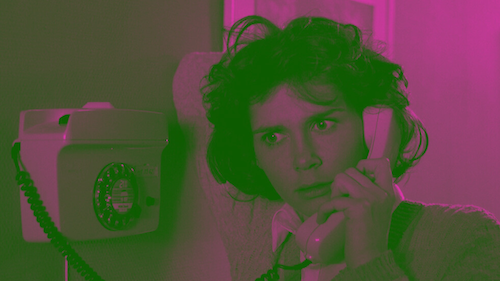
5. The Seventh Continent
We have reached the five must-see Haneke films, and I am going to kick off this high tier with Haneke’s debut feature film, The Seventh Continent. Despite how uneven some of his weaker films can be, it’s a bit eye opening that Haneke started his film career with such a phenomenal feature. What helps a lot is that Haneke holds himself back here by allowing the mystery of sin to overtake much of the narrative; we are lured into wondering what is happening or will take place within the three showcased years of this “unassuming” family. The Seventh Continent is why I feel like Haneke tried too hard with some other films: because he was clearly already fantastic at pulling audiences along and bowling them over with such harrowing cinema.
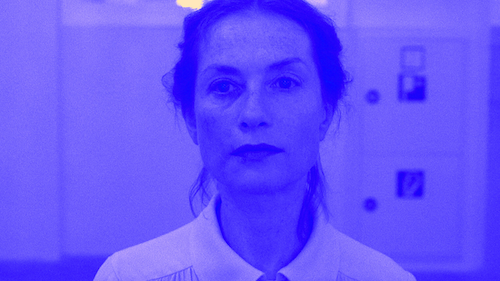
4. The Piano Teacher
First, I will comment on the film. Haneke’s The Piano Teacher is such a terrific blend of the agonizing storytelling and the pristine aesthetics that Haneke was known for. Here is a film that knows what it is like to beg to be loved: with a put-together exterior but an eviscerated soul inside of it. The Piano Teacher is an incredible look at self-sacrifice and depravity to the point of sabotage, and not knowing when and how to stop giving in to temptation and despair. Secondly, I will use any opportunity to discuss Haneke’s frequent muse Isabelle Huppert: one of the greatest actors ever. Here, Huppert is at her very best: her slow descent from a genius musician who is kept together to a depressed shell of a human being who has nothing left to give when she has sacrificed everything. One of my all time favourite performances (maybe even a top tenner for me), Huppert is truly unforgettable in this perfect, heart-breaking, gut-wrenching film.
3. The White Ribbon
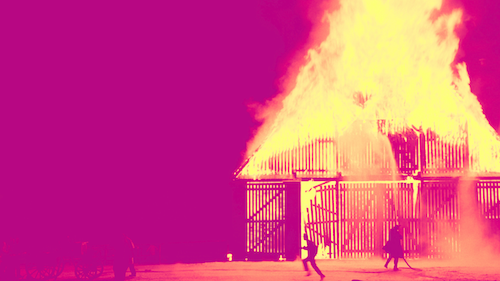
Haneke’s first Palme d’Or is The White Ribbon: a study on overbearing politics and religion in a German village leading up to the dawn of World War I. Shot in a gorgeous black-and-white visual, The White Ribbon forces us to acknowledge the double-sided hypocrisies of society. Much of the film feels like a dark presence looming over your shoulder and watching your every move: you are not safe anywhere. What sets The White Ribbon apart from other Haneke masterworks is how much hope and care can be seen throughout this film (making its heavy moments weigh even more); to see Haneke celebrate life (even briefly) feels so antithetical. To me, this film represents how Haneke actually does have faith in humanity; he just frowns upon the systems that fail us and make us the worst versions of ourselves (and, thus, we rebel).

2. Caché
If you want to see Haneke’s best written film, it would be his obsidian thriller Caché: a tortured mystery that goes against the grain of the genre frequently enough to have you feeling like you have gone insane. We follow a distraught couple trying to get to the bottom of some threatening and anonymous cassette tapes that keep winding up on their doorstep. We follow them and quickly find that their findings may not be what they seem; suddenly, all hell breaks loose. The uncertainty I feel watching Caché — even after having seen it multiple times — is distinct. In questioning everything, we are pressed to face the complexities of human nature, guilt, and depravity. If other Haneke films tried to wring your feelings out of you, Caché is a prime example of his manifesto working while feeling effortless with its anxiety and angst.
1. Amour
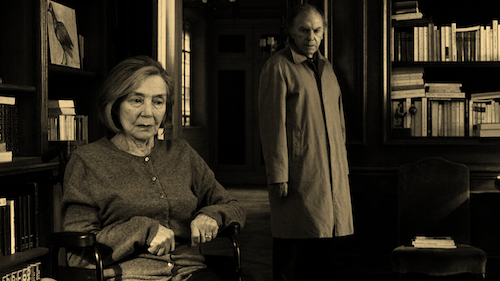
Then comes the most crushing love story you may ever watch. Selecting the greatest Haneke film was a little tough because his top films are just so impactful and singular, but I ultimately went with Amour. I have only seen this film once in full, and yet I feel like I remember every single inch of what is one of the most depressing films I have ever seen. We have an elderly couple played by French acting legends (Emmanuelle Riva, and Jean-Louis Trintignant); the wife suffers a stroke, and so the husband does whatever it takes to support her. Of course, this is a Haneke film and this would be far too simple. He pushes the limits that this couple experience, truly questioning what love and devotion looks like. By the end of Amour, you will understand that Haneke and his characters went to places most other films wouldn’t dare in the name of displaying authentic adoration (even if it is upsetting and difficult to agree with). I mean, who could forget a film like Amour: the most extreme romantic drama of the twenty-first century?
Haneke’s heaviest film is so because he encourages us to recognize that the worst things in life aren’t the events that most of us will (hopefully) never come across (as can be seen in the majority of his filmography): it’s to not know what to do when your loved one is in pain, is ill, or is dying. Is love the act of being there for them as support without actually being able to put them out of their misery, or is it the indescribable sacrifice that will finally bring them peace? There is no clear answer, and Amour knows this; at least it is willing to face such an unfathomable reality. Amour has shaped up to be one of the great tragedies of the new millennium (and maybe even of all time) thanks to its breathtaking performances, daring vulnerability, and the use of simplified storytelling to drill into the depths of its characters, their circumstances, and many other nuances. You will never be the same person once you are done watching Amour.


Andreas Babiolakis has a Masters degree in Film and Photography Preservation and Collections Management from Toronto Metropolitan University, as well as a Bachelors degree in Cinema Studies from York University. His favourite times of year are the Criterion Collection flash sales and the annual Toronto International Film Festival.