
Roofman
Written by Gabe Kanter
Warning: This review is for Roofman, which is a film presented at the 2025 Toronto International Film Festival. There may be slight spoilers present. Reader discretion is advised.
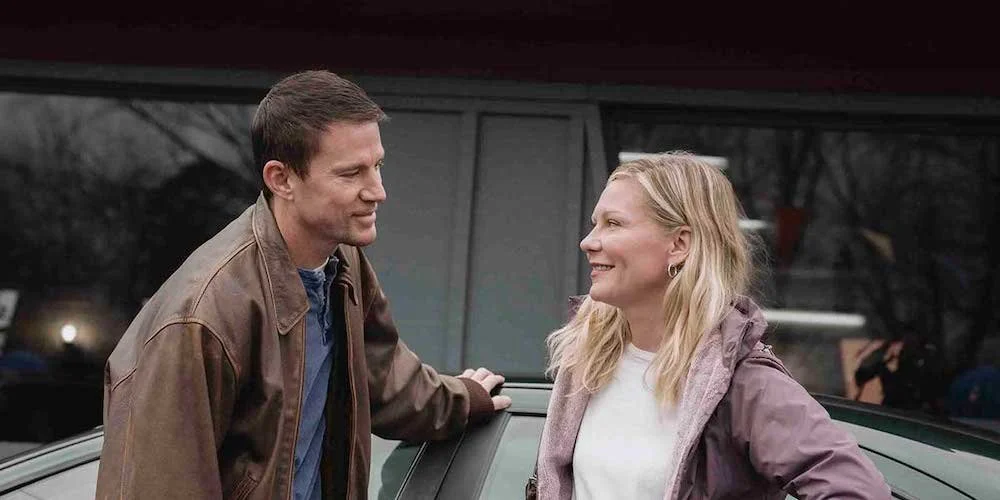
Image courtesy of the Toronto International film Festival.


There is nothing wrong with a crowd-pleasing, by-the-numbers film, as long as the performances are engaging and the emotions feel earned, but, unfortunately, when said film is based on an absolutely fascinating true story, it does feel a bit more disappointing when this is all we are left with. I enjoyed Derek Cianfrance’s latest film, Roofman, even though my most prevailing thought is that this film could have been much better when you take a step a back and look at the real story of Jeffrey Manchester, a veteran who turned to a life of crime and proceeded to rob over forty stores by entering through the roof. It seems clear to me that Cianfrance opted for a typical structure and safe approach that we see in many Hollywood crime films where a lot of nuance and deeper character writing is left on the cutting room floor. The film does a great job showing the “what” of Jeff’s story which is entertaining enough but it fails when it comes to exploring the “why”. We never fully understand why he made the choice to turn to crime, nor do we ever explore any of the societal limitations that he faced when he came back from the war and struggled to connect with and raise his family. The film still works thanks to the charm and chemistry of its lead actors, Channing Tatum and Kirsten Dunst, who are able to bring a lot of sincerity and emotional weight to fairly underwritten characters (especially Dunst, whose character doesn’t show up until almost halfway into the film).
The film starts out with Jeffrey Manchester (Channing Tatum) already deep into his life of crime as we watch him rob a McDonald’s through his usual method of cutting a hole in the roof to break in (giving him the real life nickname of “Roofman”) before robbing the place once its employees arrive to open the restaurant early in the morning. This opening scene is a strong one as it’s one of the few times we actually experience Jeff’s kind and calm demeanor while committing a crime as he offers his own jacket to the manager (Tony Revolori) who is complaining about the cold when he is about to be locked in the freezer. Upon reflecting further on this opening scene, I can’t help but realize that the film never ended up exploring Jeff’s turn to crime with enough depth for me to fully buy in. Along with lots of voiceover narration from Jeff primarily used for exposition, all we really got is a quick flashback of him being too broke to grant his daughter’s wish of receiving a bike for her birthday (this clearly motivated him to rob stores for money as it does for many criminals but how did he initially end up in this situation with his family after returning from his military service?) followed by a single conversation with his fellow army veteran and friend Steve, played by the always enjoyable Lakeith Stanfield (whose girlfriend is played by a grossly under-used Juno Temple who barely gets five minutes of screentime).
All of a sudden we are back in the present day where we witness his arrest at his daughter’s birthday party (where he was finally able to afford a bike for her thanks to all the robberies he had committed at this point), his subsequent escape from prison (a fun albeit brief sequence), and the final shift into what the meat of the film consists of – his life as a fugitive where he proceeds to live in a Toys “R” Us store for six months (waiting for Steve to return from another stint in Afghanistan in order to help him obtain a new identity). During these six months, Jeff cozies up in the store by setting up a hidden living space for himself, along with placing baby monitors throughout the store in order to observe and listen in on all of the behind the scenes behaviour from its employees, one of them being Leigh Wainscott (Kirsten Dunst), a recently divorced mother.
One of the film’s biggest challenges is its attempt to balance the comedy and absurdity of the situation that Jeff has put himself in, with the real drama and emotional weight of his romantic connection with Leigh, who he eventually meets at a toy drive event organized by Leigh’s church (which leads to more great actors Ben Mendelsohn and Uzo Aduba, being given extremely minor roles and stereotypical characters). The biggest compliment I can give this film is that it pulls this comedy, drama balance off fairly well. The comedy works thanks to well timed jokes and visual gags, enjoyable supporting characters (most notably Peter Dinkage whose portrayal of the asshole manager at the Toys “R” Us is very fun) and Tatum’s comedic chops. And yet the drama works once the plot slows down as you can’t help but root for Jeff as he spends more time with Leigh and makes genuine connections with her two kids, even though you know that there is no way this will end well for him. The climax of the film is funny, emotional and well executed and Cianfrance successfully delivers a crowd-pleasing, enjoyable story that general audiences will eat up.
As the credits roll, Cianfrance chose to show real archival footage of Jeff’s crimes and all the news coverage he received during his criminal hey day (including footage of the real Leigh Wainscott). We see multiple witnesses and victims of his crimes describing him as a nice guy who treated them well and all of the quotes from these people got tons of laughs and visceral reactions from the audience (myself included, I was even craving more). It made me think that perhaps a real life documentary on this man may have been even more successful as it would be able to avoid all of the Hollywood cliches and safe storytelling tropes that this film falls victim to.
In the end, Roofman succeeds with its concept of a friendly criminal who you can root for and empathize with and Channing Tatum delivers the goods with a very visual, nuanced performance, but when combined with the fascinating true story of Jeffrey Manchester, a layered character study and morality tale, really felt in reach here and Cianfrance deciding to not take that route had me leaving the theatre feeling slightly underwhelmed.


Gabe Kanter has a Bachelor's degree in Film and Media from Queen’s University and currently works for “Blue Ant Media”, an international streamer, production studio and rights-management company based in Toronto. He is an avid consumer of film and television and is the host and creator of the podcast “TV Sessions”, made for diehard fans of prestige dramas. TIFF is one of his favourite times of the year.