
Filmography Worship: Ranking Every Billy Wilder Film
Written by Andreas Babiolakis
Filmography Worship is a series where we review every single feature of filmmakers that have made our Wall of Directors
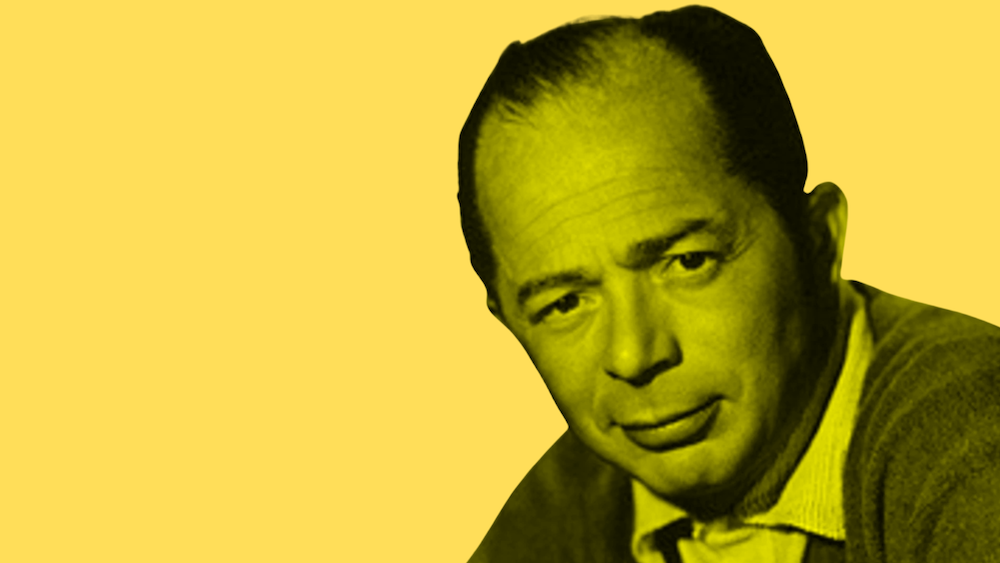
The United States has boasted some of the great writer-director dynamos in cinematic history. Some who come to mind include Quentin Tarantino, Paul Thomas Anderson, and the Coen brothers (just to name a few of many). However, I think even they would agree that they may not exist in quite the same capacity if a particular master of yesteryear didn’t pave the way for them. Enter Samuel Wilder, otherwise known to all as Billy Wilder: the Austro-Hungary-born artist who would one day migrate to Hollywood, become a proud American citizen, and redefine the nation’s film industry as one of its top storytelling visionaries. He always possessed a fascination with writing, having started out as a freelance journalist in Berlin before eventually transitioning into screenwriting. He would craft twelve German screenplays before arriving in Hollywood in 1934 where he would continue to be prolific for the majority of his career. Before his big move, he directed his first film, Mauvaise Graine: a French comedy over in Paris. However, once he landed in California, the Billy Wilder we are more acquainted with now was born.
While writing more screenplays for other directors, it wouldn’t be too long before Wilder would return to directing (even though, to be fair, it was eight full years since Mauvaise Graine when The Major and the Minor was released). Once his sophomore comedy — starring Ginger Rogers and Ray Milland — dropped, Wilder became a workhorse, churning out six films in the forties, and nine films in the fifties (including a staggering three films in 1957 alone). Five films in the sixties is also quite a handful of releases by the standards of most, but it was certainly the sign of slowing down by what Wilder accomplished before; he would ultimately produce five films between 1970 and 1981 to wrap up his career. With these twenty six feature films (and one short I have tossed in, since it was the lone other film he directed) came many accolades (including Academy Awards for Best Picture, a Grand Prix at Cannes — which would be renamed to the Palme d’Or — and many others), and numerous partnerships with some of the finest actors (Jack Lemmon, Ray Milland, Audrey Hepburn, Walter Matthau, Shirley MacLaine, William Holden, Marlene Dietrich, Marilyn Monroe, et cetera) and co-writers (including frequent collaborators Charles Brackett and I. A. L. Diamond).
Wilder’s expertise also changed the courses of many genres, considering how versatile the filmmaker was. Despite showing a clear affinity for comedies and satires, Wilder also delved into war epics, brilliant films noir, sublime dramedies, stirring romances, and even one of the great legal dramas in all of cinema. His characters leapt off of the pages he wrote since they were always so distinct; so animated; so pulpy; so alive. These roles became playgrounds for actors to run amok within, hence the many amazing performances that have stemmed from Wilder’s films. Even the worst Wilder films possess intriguing actors trying to push themselves as thespians via these screenplays. It’s one thing to see how Wilder’s words got interpreted by other filmmakers, but to get nearly thirty opportunities for Wilder to bring his own writing to the big screen is quite the blessing. While the start and end of Wilder’s filmography is quite rocky, no one can deny how pristine his prime is (and I hope the list below proves this).
It is easy to get the flimsier films out of the way, but placing Wilder’s greatest works into an order is quite the challenge. How does one rank such magnificent films, especially when they are juggernauts within their time periods; their genres; the influence they would instill for generations? I sadly won’t be including all of the films Wilder wrote, because then this list would become far too long to maintain (however, I do highly recommend the romantic comedy Ninotchka: easily the best Wilder film he didn’t direct [Ernst Lubitsch is no slouch, though]; Greta Garbo’s performance in it is one for the ages). I will be focusing solely on the films Wilder directed, which is already enough material to wade through. The lower ranked films aren’t for Wilder beginners, believe me, but there are at least fifteen must-see titles that will keep you going. For those of you who are Wilder aficionados already, I hope that you discover some new favourites to cling on to like I did when I finally concluded his filmography. Here’s to one of the strongest storytellers and directors in all of American cinema. Here are the films of Billy Wilder ranked from worst to best.
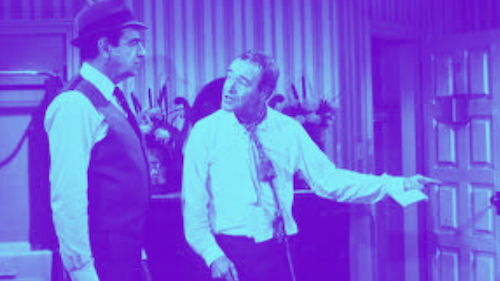
27. Buddy Buddy
Sadly, Wilder ended with what is unquestionably his worst film: the whopping dud known as Buddy Buddy. What is meant to be a dark comedy involving suicidal tendencies and a hitman for hire who gets caught up in far too many antics, Buddy Buddy winds up being indicative of the worst kinds of comedies of the eighties; it’s the sole time that Wilder felt behind the times (and the only Wilder film I’d call outright irritating). Only watch this film if you are a diehard fan of Wilder or any film that pairs Lemmon and Matthau together.

26. Mauvaise Graine
After beginning at the end, we jump straight to the beginning with Wilder’s earliest film, Mauvaise graine (or Bad Seed in English). This French film — co-directed by Alexander Esway — feels like the second half of the English title of the film: a seed of what Wilder would become. The end result is too thin and flimsy to stick with you, but it is a so-so attempt at the screwball genre that does genuinely feel like the starting point of a giant-to-be; I’d argue that you’d need to see Wilder’s best films to understand the signs of promise in Mauvaise graine, though.
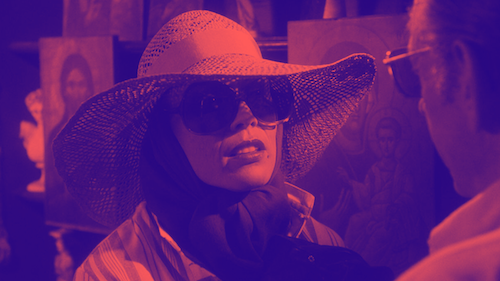
25. Fedora
We jump back to the end of Wilder’s career with his penultimate film: the polarizing Fedora. While this film may have its fans, I found the film derivative of what made Wilder so strong. The characters feel like caricatures; the dialogue doesn’t ring true; the drama feels too serious to the point of feeling cliched. I will say that Fedora is one of Wilder’s most stylish feature films and that the aesthetic is one of the sole reasons to prioritize it over other Wilder works; the film winds up being disappointingly bland when it looks this good.
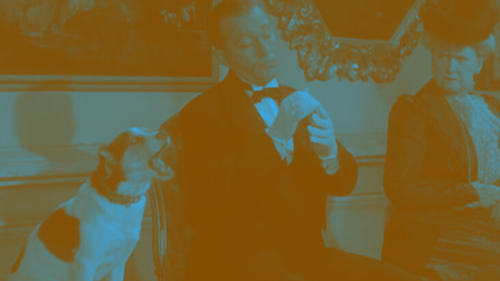
24. The Emperor Waltz
If I told you that a Wilder film starring all-time entertainer Bing Crosby and master actor Joan Fontaine was pure fluff, you’d be disappointed, right? Well, get disappointed. The Emperor Waltz is simply just “fine” to the point of being forgettable, mainly because the music isn’t special, the story is typical, and there isn’t a single other component that truly stands out. I don’t feel angry after this film, or as if I have wasted time. I feel unchanged after The Emperor Waltz, which may be even less fulfilling.
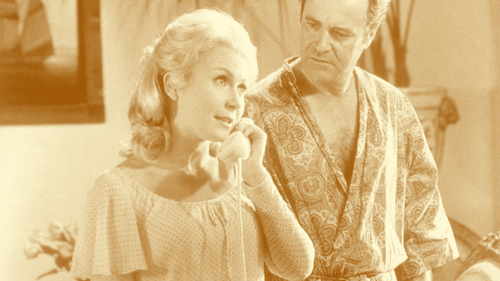
23. Avanti!
I’d consider every film from this point on a leap in quality. Avanti! feels like the kind of film that Wilder would have had more restraint making in the fifties or sixties. It feels a little unhinged, as if Wilder — a filmmaker who was sadly held back by the Hollywood Code time and time again with his daring visions — was testing the waters with what he could get away with, instead of telling a succinct story of self-discovery and grief. Avanti! is at least bold enough that it takes its travel approach with enough locations and sights to make this comedy feel like a wanderlust-for-life journey.
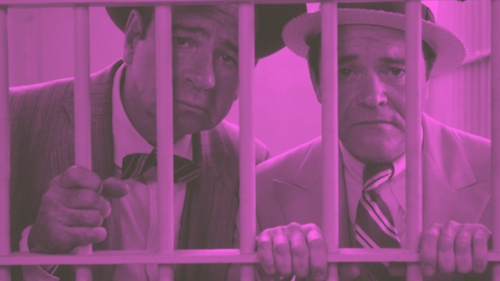
22. The Front Page
No, The Front Page by Wilder isn’t nearly as good as His Girl Friday (one of the top screwball comedies ever made, based on the same source material), but it’s actually not too shabby in its own right. It’s sadly one of the only times where I felt like Wilder’s writing (with frequent partner I. A. L. Diamond) is bested only because of the direct parallels between this film and His Girl Friday, but, otherwise, it is interesting seeing how Wilder interprets this highly popular story; the answer is with enough self awareness and flair that it remains fascinating despite the obviously brutal competition it has.

21. The Seven Year Itch
I really like The Seven Year Itch: maybe just not as much as the average cinephile. While many others may see some rom-com antics between Tom Ewell and Marilyn Monroe, I cannot look past how stymied this film is by the Hollywood Code: a fact that Wilder discussed years after The Seven Year Itch was released. This was meant to go further with its commentary on wandering minds and monogamy, especially with the hilarity that would ensue. Instead, to me, The Seven Year Itch feels more like a “what if?” scenario by a director who often toed the line between playing by the rules and breaking them better than this.

20. Kiss Me, Stupid
If The Seven Year Itch felt too held back, then Kiss Me, Stupid feels too anarchistic, as if Wilder was making up for lost time (by the standards of the sixties, mind you). While this sounds awful on paper, I kind of admire how immature and out-there this film is by Wilder’s standards, especially since the audacity of some of this sex comedy caught me off guard the first time I saw it. I think Kiss Me, Stupid reads better via the warped minds of viewers today, but I don’t think it’ll take off as some misunderstood masterpiece; I do think it’s slightly underrated, and definitely worth seeing if you are a Wilder obsessive.
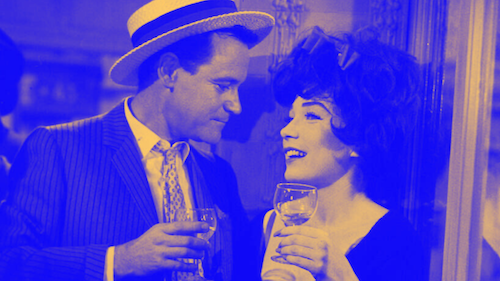
19. Irma la Douce
The concept of Irma la Douce is farfetched, especially since the idea of one person pretending to be another person was done far better in Some Like it Hot. However, it’s the commitment from stars Lemmon and MacLaine that turn this sillier film (that of a fired police officer who creates a persona to be the sole client of a prostitute) into something interesting; perhaps it is Wilder the director who outshines Wilder the writer this time around.

18. The Spirit of St. Louis
From this point on, I’d call all of the next films good enough to warrant a watch, no matter who you are as a cinephile. We kick off with the worst of the best: a fairly thrilling biopic of Charles Lindbergh (played beautifully by Jimmy Stewart: a star I wish Wilder worked with more). My only issue is that it feels a little overlong, considering it is two hours and fifteen minutes; a little bit of trimming would have helped. Having said that, The Spirit of St. Louis contains some of Wilder’s most thrilling direction; how he captures the art of flight and perseverance here is extraordinary.

17. The Private Life of Sherlock Holmes
If you didn’t know that Wilder made a film about Sherlock Holmes, now you do. The best Wilder film from his weakest period (the last ten-or-so years of his career), The Private Life of Sherlock Holmes is a unique hypothesis: what would it look like if this iconic character was rendered humanistic and palatable? The end result is a grounded look at a figure who is usually made to feel untouchable, with a pinch of comedy to dissuade The Private Life of Sherlock Holmes from ever feeling either pretentious or oblivious.
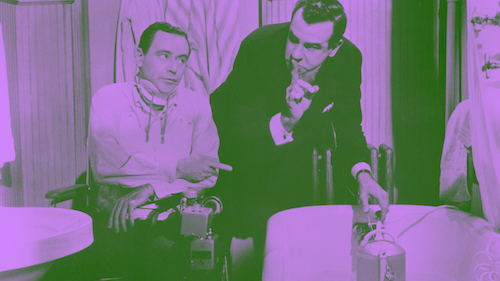
16. The Fortune Cookie
Another time where Lemmon and Matthau were paired together, The Fortune Cookie is a dark comedy where a lawyer and his brother-in-law go through great lengths to get the latter a major insurance payout by exaggerating his claims after he is injured. The Fortune Cookie is another Wilder film that verges on the ridiculous side of things, but I find its hyperbolic nature entertaining, Lemmon his dependably great self, and Matthau in top form (Matthau is almost channeling external forces for this film with a true exposition of comedic acting). The Fortune Cookie is a little flawed, but its highs are quite high: when it succeeds, it’s a riot.
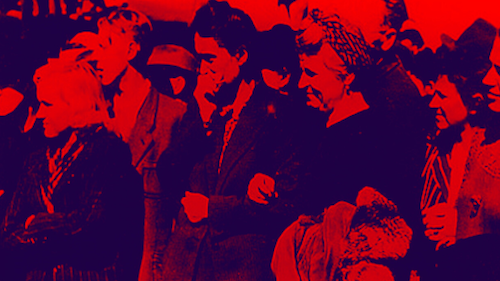
15. Death Mills
The lone short that is included here is also the only documentary. Death Mills is a film produced by the United States Department of War during the Second World War. Wilder worked with Hanuš Burger to make Death Mills: a depiction of the atrocities of the Nazi party. Easily the most harrowing film Wilder was ever a part of (for obvious reasons), Death Mills is not for the faint of heart. However, if anyone wants to see how Wilder would handle both the documentary medium and a film about the Holocaust, Death Mills is quite the achievement. Just be careful before proceeding: this film is incredibly heavy.
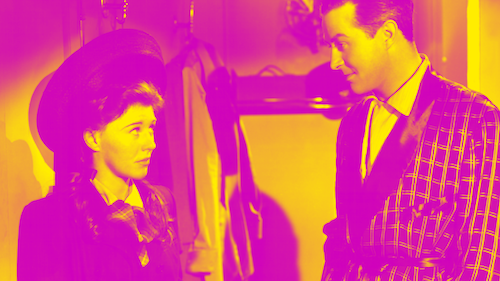
14. The Major and the Minor
Wilder’s first English language film, The Major and the Minor, is a hit. You have Ginger Rogers playing Susan: a woman pretending to be a twelve-year-old child. Susan winds up in a heap of trouble when she connects with Major Philip who vows to protect her; meanwhile, she falls for him and cannot reveal her true self. The cleverness behind this premise and the amazing execution between Rogers and Ray Milland is quite something. This may be one of the more slept on Wilder films: this list is my way of placing The Major and the Minor on your radar.

13. Love in the Afternoon
Despite how frequently Wilder flaunted his capabilities within a variety of genres, seeing him deliver something as stripped down and bare-bones as Love in the Afternoon is also quite special. The premise is a little more complicated than what transpires: an accidental game between an investigator, a playboy, and the investigator’s daughter. What we get is something a little more rooted in visceral passion: a puzzle built on feelings and moods as opposed to wit. A lot is left for you to unpack in Love in the Afternoon which — despite its winding concept — feels rooted in the oddities of reality, allowing for the tender and charming performances at the forefront to truly shine.

12. A Foreign Affair
A Foreign Affair is so multifaceted, even by Wilder’s capabilities. This take on a former Nazi singer being pursued by an investigator years later is spellbinding, considering how it is driven by the curse and karma of the horrors of yesteryear. Well acted, well shot, and surrounded by a shroud of mystery and cynicism, A Foreign Affair is a film you can dive in to and feel. Wilder then does the most daring thing you can do with a film this stylish, this bleak, and this mystical: he makes it fun (by some miracle, the dose of comedy actually works and doesn’t destroy A Foreign Affair).

11. One, Two, Three
Actor James Cagney would retire for twenty years before he starred in 1981’s Ragtime. If One, Two, Three was to be his last film, he would have gone out on a high note. Another criminally underrated Wilder film, this political caper — which Wilder has admitted is indebted to the aforementioned Ninotchka — furiously blows fire at everything in its way. Its take on the Cold War and its side effects (including rampant capitalism and communism) is leveled by Cagney’s electric and magnetic performance: an enigmatic and bombastic character that — somehow — feels natural within the miasma of politics (perhaps it is the machine gun pace of the film and its dialogue, which Cagney always keeps up with). Now this is Wilder’s true answer to His Girl Friday.
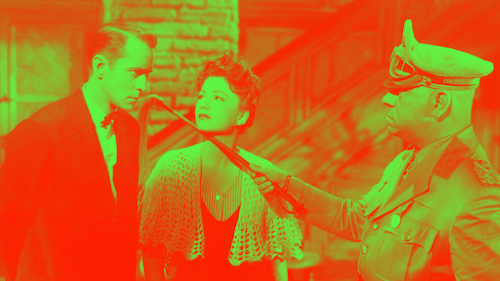
10. Five Graves to Cairo
It didn’t take long for Wilder to reach his first great film of his career in the form of Five Graves to Cairo (it was just his third feature film, released in 1943). A thrilling war film — based on Hotel Imperial (and maybe the strongest adaptation of it) — Five Graves to Cairo is the work of a rising filmmaker who just became confident in his capabilities. While Wilder got better at dialing settings and casts down to just the essentials, it is nice to see what a larger scaled Wilder film would feel like: Five Graves to Cairo is a glimpse at someone who dabbled in epics but learned how to remain grounded at the same time.
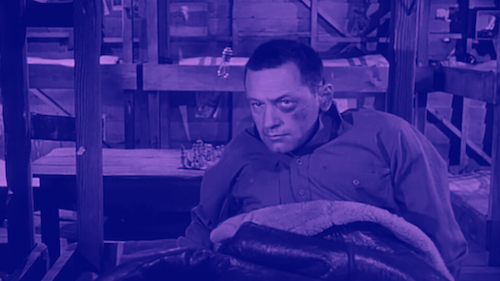
9. Stalag 17
At first, Stalag 17 appears to be a war film: one which depicts prisoners of war trying to survive. Instead, it is secretly a psychological thriller where we are to guess who is the informant costing the lives of American POWs within a German camp. Wilder’s Stalag 17 is intense and stirring, as we see the tension and sanity of prisoners boil over within a confined setting. As you guess throughout this film, there is one certainty: William Holden is extraordinary in his Oscar-winning turn here as J. J. Sefton. Intense to the bitter end, Stalag 17 is a reminder that Wilder could make anguishing cinema whenever he felt like it (he clearly preferred making lighter films for a large portion of his career).
8. Ace in the Hole
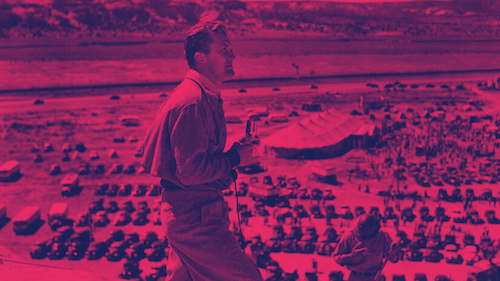
If Stalag 17 is Wilder’s most intense film, then Ace in the Hole is certainly his darkest film: a satire that is so cynical that you cannot ignore the harsh truths being spilled out all over the screen. As we watch a former journalist create some scoop of his own to find relevance, we see the domino effect of selfishness take place: this arrives in the form of a town that has come to a standstill (there’s that attention that was once craved). Likely deemed too pessimistic when it first came out, Ace in the Hole is a film that has aged well in a worrisome way over time, predating the kinds of toxic orchestration that permeates through the ages of fake news, social media, and other forms of manipulation and sensationalism.
7. Sabrina
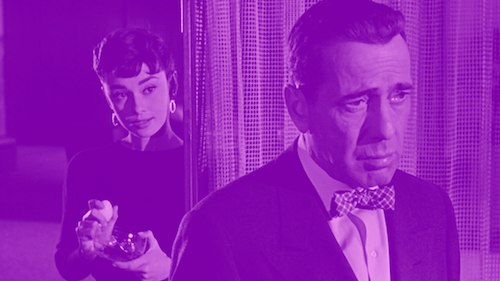
Sabrina could have been just a regular rom-com, but it is rooted in such interesting characters. There’s the titular Sabrina (Hepburn), who was once broken to the point of wanting to die and has returned from Paris a confident goddess. We also have brothers David (Holden) and Linus (Humphrey Bogart) who, over time, vie for her attention in different ways (David is outwardly charming in a superficial way, whereas Linus is broodingly mysterious and a magnet). Sabrina is not quite rooted in reality, but I think that’s why I adore it: it is a romance that is driven by the concepts of what others find romantic; in Sabrina, these tropes are often called out, pit together, and scrutinized (endearingly). Ultimately, Wilder softens in Sabrina and — just like his characters — finds love in the most unusual places and ways, rendering the film far more heartwarming than it could have been in the hands of a naysayer.
6. The Lost Weekend
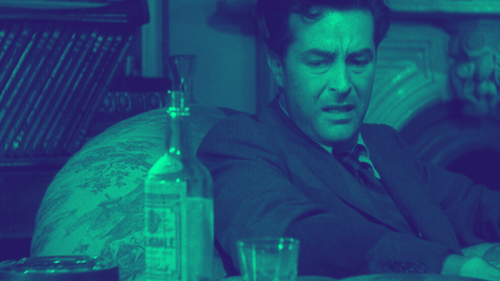
The first Wilder film to win Best Picture at the Academy Awards (as well as the Grand Prix at Cannes, which would become the Palme d’Or: the first film to pull this off), The Lost Weekend is as tremendous as its reputation insists. There aren’t many depictions of addiction in cinema this upfront, effective, and empathetic, as we watch Willand’s character, Don, throw away everything he has over the course of a few days at the hands of alcoholism. The Lost Weekend is a heartbreaking drama at first before it succumbs to the darkness and becomes a fully fledged psychological freakout. The only slight I’d point out from this otherwise perfect film is that it is sadly blemished by the Hollywood Code with an ending that doesn’t match the obsidian storytelling that came before it; The Lost Weekend is marvelous enough that it cannot be destroyed by this forced Hollywood conclusion nonetheless.

5. Witness for the Prosecution
Despite the dependability of the genre, the courtroom drama does not contain as many masterworks as I feel like it should: so many films scratch the itch I have, but there are very few legal thrillers that I’d consider timeless or perfect. There are very few exceptions, and one is Wilder’s Witness for the Prosecution: a courtroom film that is exceptional. It is a film that is daring enough to point a finger at the labyrinthian ways of the legal process and the major players within it, all while granting us — the audience — enough twists and turns to forever keep us on the edge of our seats. Featuring a trifecta of peak performances by Tyrone Power, Charles Laughton, and Marlene Dietrich, Witness for the Prosecution never loses its steam from the first minute to the last. This is a legal drama that actually knows the law inside and out; Witness for the Prosecution also has layered characters who have sculpted interpretations of what the law means to them, resulting in one of the strongest courtroom dramas of all time.
4. Some Like It Hot
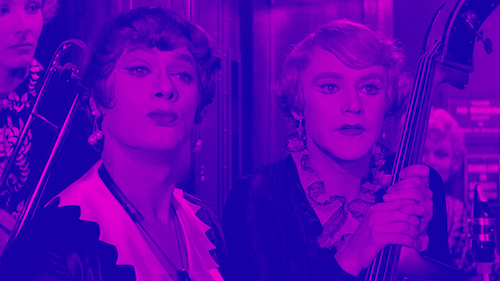
Wilder fought and fought and fought against the Hays Code. He sometimes surrendered to it (The Seven Year Itch, The Lost Weekend). He lost his own sense of self once the Hollywood Code was on its way out (Kiss Me, Stupid). However, if there was one project we could point to as the exact moment where Wilder placed his final nail in the coffin of the Code’s demise, it would be Some Like it Hot. People may credit the film’s sharp humour as the reason why it has stood the test of time (and its ability to tiptoe around what censors could flag with such flair). They may also bring up the taboo concept of male musicians disguised as women while on the run (a topic that has resurfaced as one to debate in the twenty-first century). I don’t think anyone discusses how dark this film is, which I believe is equally important when it comes to Some Like it Hot’s impact and lasting success: it is as grim as it is bubbly, which I think is essential to the film’s vibrant and unforgettable nature. Finally, we cannot forget what may be Wilder’s best hand at dialogue, especially the closing line “Well, nobody’s perfect”: a zinger that remains an untouchable punchline.

3. The Apartment
Wilder’s second Academy Award winner for Best Picture, The Apartment is so damn good that such an accolade almost doesn’t feel like it is enough. The Apartment is a rare film where everything is in such top form that it blends together in an amalgamation of spirit and mood. We can almost feel the crisp New York City air as we watch Bud Baxter stuck outside; nay, we are Bud Baxter. The dramedy genre is trickier than it appears, since so many filmmakers will lean more towards one side of the spectrum at any given time (this is the comedic part of the film, and this is where the drama begins); The Apartment is almost entirely both sentiments at any given time. It is the truest sense of tragic lives being entertaining (without ever being exploitational). It is an existential exposition of what a dead end life truly feels like: a crushing realization millions of us grapple with on a regular basis. If anything, The Apartment turns ordinary lives into the works of mythology: the neglected are suddenly wells of purpose and love. How could a film this humble be so monumental? Such is the power of The Apartment.

2. Double Indemnity
It’s actually shocking how quintessential Wilder feels with films noir because — as you can see through the course of this list — he wasn’t exactly the most frequent practitioner of the style. Then there’s Double Indemnity which is seen as the poster film of all things noir. It’s easy to see why. It obeys many of the tropes the style requires (the downward spiral of the investigative protagonist, the bewildering femme fatale, the heap of regret, the plague of discovery, the stench of comeuppance, and don’t forget the plethora of shadows). However, Double Indemnity didn’t just play by the rulebook: it set new standards. The inscrutable depth — even when it is spelled out via overlaying narration — is the kind of sickening realization you feel in your bones: the response to feeling the danger before you can properly think out what exactly is going on. If there was ever a film that many imitated — from the Venetian blinds to the flirts with danger — and failed to replicate in Wilder’s repertoire, it’s Double Indemnity: the textbook noir classic.
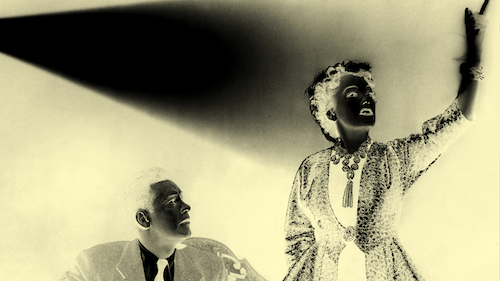
1. Sunset Boulevard
Then, there is Sunset Boulevard: the noir that is so ahead of the pack that it can never be caught. If Double Indemnity showed what a traditional noir could achieve, then Sunset Boulevard shattered all expectations with a sledgehammer of bleak comedy, psychological distress, and the utmost scathing depiction of the entertainment industry. It almost feels like Wilder’s entire career built up to this point, seeing as Sunset Boulevard is cloaked in the obsidian drapes of the German expressionist movement Wilder caught a taste of at one point, and is upheld by a damning realization of the world he immigrated to in search of a career; Wilder may have loved Hollywood, but he hated what was capable within it (from the destroyed dreams of budding talent, to the tortured souls who once shone brightly). One of the most disheartening scenes in all of film is seeing silent stars like Buster Keaton and Anna Q. Nilsson reduced to a game of bridge (as if they are trapped in this purgatory as the industry moved on from them); star Gloria Swanson herself was a silent actor who — by some miracle — transitioned into talking pictures. She plays Norma Desmond with truth, resentment, and gratitude in the form of hindsight.
Even if Sunset Boulevard didn’t feel like a cultivation of all things Wilder, or if I didn’t believe it was the ultimate take on what a noir film could be, I would still consider it Wilder’s magnum opus because it is as singular as films get. Any image from the film is an instant transportation back to the first time you experienced Sunset Boulevard. Even when the film spoils itself for you in its preliminary shots, you are glued to the screen to discover how we got to this place. Sunset Boulevard is as much a love letter to the art of filmmaking as it is a warning that not everyone gets out of it alive or in one piece. In short, Sunset Boulevard is ruthless, uncompromised, and hypnotic. It is one of the greatest films about cinema, one of the strongest works of the fifties, and an inventive noir that predated the neo noir concept by decades. It also is, in my eyes, Billy Wilder’s magnum opus.


Andreas Babiolakis has a Masters degree in Film and Photography Preservation and Collections Management from Ryerson University, as well as a Bachelors degree in Cinema Studies from York University. His favourite times of year are the Criterion Collection flash sales and the annual Toronto International Film Festival.