
Filmography Worship: Ranking Every Roman Polanski Film
Written by Andreas Babiolakis
Filmography Worship is a series where we review every single feature of filmmakers that have made our Wall of Directors

Warning: this article includes triggering content. Reader discretion is advised.
If you have read any of my other Filmography Worship articles, you’ll find a reasonably thorough celebration of the director whose work I am assessing. I may go into the backstory of their careers, or find ways to describe the evolution of their filmmaking style. However, you will not find such praise today. It’s true that Roman Polanski is one of the strongest directors of all time; he has many prestigious awards including an Academy Award, a Palme d’Or, three BAFTAs, numerous Césars, and a Golden Bear, so it is hard to deny his body of work. However, I am really not interested in getting into who he is as a person. I could study his artistic background, detail his early projects and points of breaking through the film industry, and profess the influence his films have had on cinema, but if I am to depict what kind of a person Polanski is, there is no way I can hide the fact that he is a monster of a human being. If you want to attack me and insist that what I am alluding to — his history as a rapist — is just a snippet of his life, I ask you in return: how could the sexual abuse of others ever be overlooked or excused (let alone the fact that multiple targets were minors)?
Instead, I want to keep things strictly academic here. I cannot help that I love a number of these films, but I see my adoration as a celebration of all of the people involved. Yes, Polanski’s eye for filmmaking — particularly within the thriller and horror genres — is something that enthralls me. Throughout the course of pop culture, many people have been able to make art that is far greater than they are, even — and especially — on a moral level. Art also transcends us as complicated, flawed beings. After an artist releases something (a film, an album, a novel, a painting), part of the ownership is that of the audience who ingest this creation and find a relationship with what they are experiencing; how much of a film is what we make of it (if a director grants us the opportunity to think about what we are presented)? Films can shape us as emotional, intelligent, curious creatures. We can be pushed, challenged, and inspired by them. Of course films can become a part of us, and we can find ourselves within them as well. Some of my all time favourite films are made by Roman Polanski. I have zero respect for him as a human being, and I hope that this list doesn’t imply that I do.
You may question the purpose of even writing such an article where I have gone through the effort of watching every Polanski film if I am so against his character. I cannot blame you for your reservations, should you have any. I am a completionist with a Wall of Directors: a digital archive of every filmmaker I consider a master of the medium. With enough groundbreaking works to detail, I cannot deny Polanski’s importance as a director. I have also vowed to go through every feature film of any filmmaker who has made this hall of fame of mine (of sorts). I view this as an opportunity to present the evolution of his cinematic craft, as well as both his strengths and flaws. That is what I will do, as I aim to be as simplistic and technical as possible. I have said my piece on how I view him as both a director and as a person. I will now let the films do the rest of the talking, and will share my individual relationships with them. Here are the films of Roman Polanski ranked from worst to best.

23. The Palace
One of the worst films by a legendary director that I have ever seen is Polanski’s eat-the-rich dramedy, The Palace: a shameless satire that has no self awareness and ability to separate itself from the filth and nonsense that it hopes to critique or humanize. Annoying, cheap, and obnoxiously edgy, The Palace is a borderline pathetic release from someone who once had his finger on the pulse of proper danger and taboo commentary. I disapprove The Palace with extreme disdain and prejudice.
22. What?
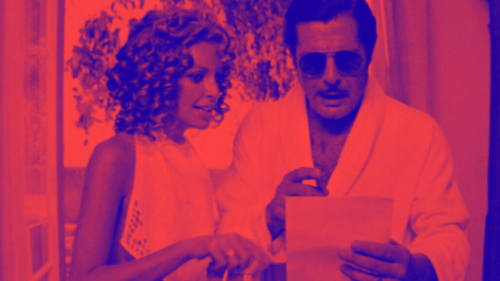
Polanski didn’t just release one of his worst films towards the end of his career. What? came early (in 1972, no less) and is indicative of the director’s signature style at its very worst. It is unfunny, uninteresting, misogynistic (perhaps his most problematic film in relation to how he films women), and rather pointless. This is only marginally better than The Palace because What?’s island life setting and Italian architecture is far easier on the eyes than the gaudy style and appearance of the former film. Having said that, this “romantic”, existential getaway is really not the effort to watch.
21. Pirates
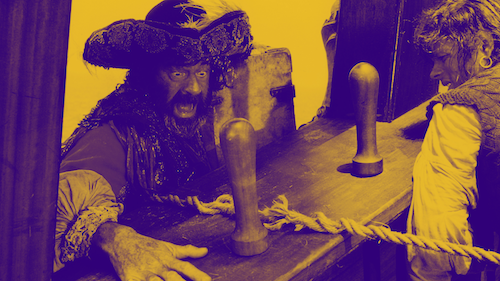
Whereas The Palace and What? feel like films where the director isn’t even trying whatsoever, Pirates — an action-adventure-comedy involving the swashbucklers themselves, particularly Captain Red — feels like Polanski was trying too hard. While the sets and costumes are quite dazzling, the rest of this film feels buffoonish, thin, and outright boring, despite the amount of work that went into it. I feel better about being critical about the aforementioned films because they feel half-assed and, as a result, I care about them as much as Polanski clearly does, but Pirates was clearly made with the clear intention of being a fun ride that would sweep audiences away; it’s sadly a catastrophic failure in that regard.
20. The Ninth Gate
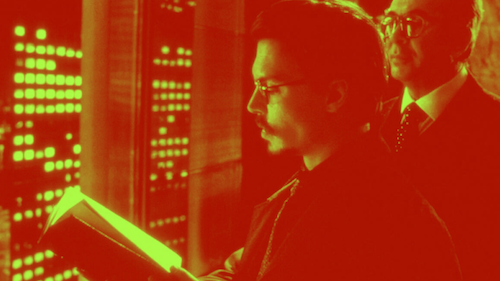
I know this horror noir film has its fans, but I found The Ninth Gate to also be a chore to watch despite its intrinsic artistry (like Pirates); I liked looking at this film, but I didn’t appreciate actually watching it. It feels narratively short changed to the point that this mystery film is no longer intriguing; toss in an ending sequence that is so ridiculous that I instantly liked The Ninth Gate significantly less (can you say “fire sex” without sounding like an idiot?), and you’ve got a film where a director wanted to spice up a dull dish and added way too much chili to the point that this meal tastes awful.

19. Based on a True Story
We’ve seen the writer’s block story done time and time again, from Federico Fellini’s 8 1/2 to Barton Fink by the Coen brothers. Then, there’s Polanski’s Based on a True Story: a complicated affair between a writer and the concept of the muse (in this film, adoration is replaced by obsession, and our subjects swap places). I think Based on a True Story is decent on paper, but these kinds of films are usually made by storytellers who want to keep writing but are running out of ways in order to do so; their passion rings true. Polanski wasn’t exactly no longer giving a shit (such is the case with The Palace), but Based on a True Story may have been stronger and less flimsy had it come out earlier in his career.
18. The Fearless Vampire Killers
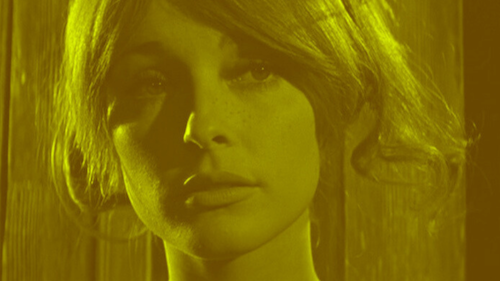
This film is quite low, and I want to point out that I actually unironically like this film quite a bit. I have fun with this horror comedy romp and its camp nature. Having said that, the film is stupid and it knows that it is stupid. The self-awareness that The Fearless Vampire Killers boasts goes a long way, turning this spectacle of buffoonery into a night where you don’t have to take anything seriously. I suppose that I feel stronger about Polanski’s films from this point on and that we have passed the worst of the worst. I also don’t feel great about elevating The Fearless Vampire Killers higher than this spot despite how much I enjoy it, because it is still objectively messy and goofy compared to the more refined attempts placed above it. Consider this a guilty pleasure of sorts for me.
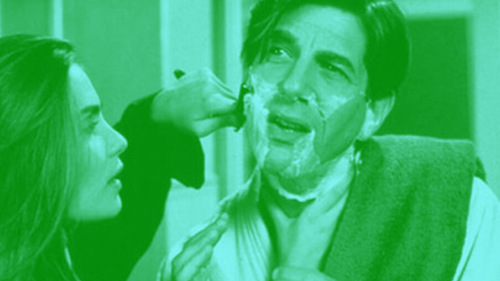
17. Bitter Moon
It might feel counter productive to place a dullish film above a fun one but I do think that Bitter Moon is better made and more successful than The Fearless Vampire Killers; I would just rather revisit the latter film. Bitter Moon is actually kind of alluring when it doesn’t give in to the glacial tone that is threatened throughout its runtime, but the aesthetic style and psychological droning render this film at least somewhat captivating (even if the narrative isn’t as entertaining as other Polanski thrillers).

16. Death and the Maiden
Death and the Maiden has the same issues that Bitter Moon possesses: a confusion between what is mesmerizing and what is dreary (maybe Polanski struggled to adapt his sense of how to make thrillers during the nineties). What gives Death and the Maiden the slight edge is its performances, especially Sigourney Weaver who was untouchable during this era; she, and the rest of the cast, propel us forwards when the film lags behind and desires to loaf around.
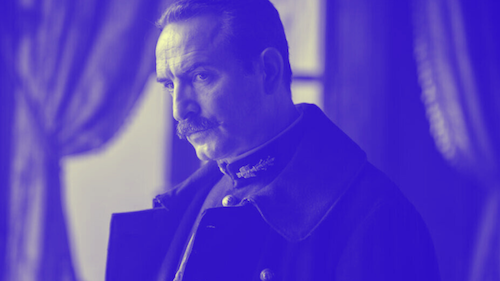
15. An Officer and a Spy
What may wind up being Polanski’s last good film, An Officer and a Spy is a fairly commendable attempt at depicting the events surrounding the Dreyfus affair (a topic that has been covered before in the Best Picture winner, The Life of Emile Zola, although Polanski’s film is a little more gripping and less indebted to Hollywood conventions). I do find that An Officer and a Spy drags on a little bit, but, in ways, this feels like a slight return to form with how Polanski handles historical epics (see The Pianist later). Even late into his career and life, Polanski has something substantial here; the film isn’t a complete slam dunk, but it’s strong enough to resonate.

14. Oliver Twist
After winning the Academy Award for Best Director and the Palme d’Or for The Pianist, one would think that Polanski would have wanted to continue his streak of strong historical pictures after a career full of horror and thriller flicks. That wasn’t the case, as he opted to make an adaptation of the beloved musical Oliver Twist instead. Shockingly, this film isn’t too shabby (it’s certainly better and far less irritating than Carol Reed’s mediocre film of the same nature); whereas Pirates flounders within its elaborate sets and costumes, Oliver Twist thrives. Of all of the films I watched to finish this filmography, I was most surprised by this textured, nuanced, thorough version of Oliver Twist that didn’t have me bored to death.
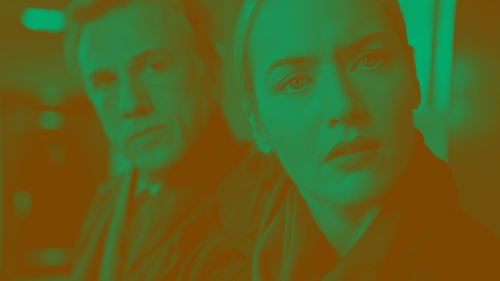
13. Carnage
Simple is sometimes effective. Carnage doesn’t boast the strongest story (two pairs of parents discuss an incident involving their sons over the course of an evening), but its effective dialogue and powerhouse cast elevate this writing prompt concept into a dramedy about insecurity, anxiety, and gaslighting. Had there been a weak link in the cast, maybe Carnage would have faltered. As is, this is an entertaining series of squabbles that is short enough at eighty minutes to not reveal its thinness in great depth.

12. Venus in Fur
On the topic of simplicity, there’s Venus in Fur. Similar to Based on a True Story and that film’s attempt at depicting obsession and repulsion between an artist and their muse, Venus in Fur is a far stronger example of this unhealthy relationship; Venus in Fur takes place over a short period of time like Carnage, but the minutes are used even more strategically here. As we follow a director and an actress through their loaded conversation on the stage, theatre begins to blur with reality, making for an interesting depiction of how art is a vessel. Carnage’s short runtime helps cure the film of its ailments; Venus in Fur’s duration is exactly the right length, before we dawdle too long.

11. The Ghost Writer
An underrated film is the political neo-noir thriller, The Ghost Writer: an engrossing story about the titular ghostwriter stumbling upon the awful secrets of a former Prime Minister who is clearly vying for a different version of their life to be told. What begins as a business partnership becomes a strained rivalry of sorts, as power dynamics overtake most potential outcomes and leave you wondering how the film will unravel. The Ghost Writer is a film that is lost in time perhaps because of who it is affiliated with — if we are going to champion any of his films, maybe we should also elect this one, also to spotlight Ewan McGregor’s terrific central performance and one of Pierce Brosnan’s finest hours.
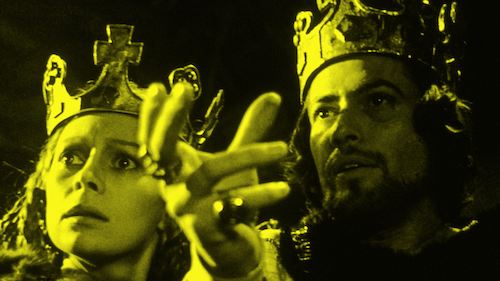
10. Macbeth
The first Polanski film I ever saw was his adaptation of William Shakespeare’s Macbeth, shown to my high school English class. I’d argue that my teacher may have been a bit ahead of themself showing such a gruesome, gory, heavy version of the tragic story to a class of naive teenagers, but I did need to seek out more of what I saw (I was a tainted, desensitized horror aficionado at that age; I was unphased). I learned that this was a film made after the Manson murders (including Polanski’s pregnant wife, Sharon Tate, who also starred in The Fearless Vampire Killers with him); Polanski grapples with loss and grief in one of the most visceral Shakespeare films to date (to the point that it’s almost a horror film). This is a punishing yet worthwhile adaptation that drills into the anguish of Shakespeare’s words without getting too lost in the spectacle of it all.
9. Frantic
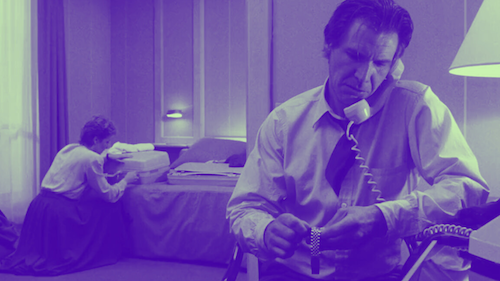
Polanski would churn out a couple of weaker thrillers in the nineties, but they were kicked off by Frantic: the best of this wave of films from 1988 (only his second film of that decade after the less-than-stellar Pirates). Frantic is every bit as clever, brooding, infectious, and aesthetic as Polanski’s desires for the films that would come after; the execution is far more complete here. Frantic is tense, engaging, and shocking; this narrative and emotional roller coaster is accompanied by one hell of a score by the late, great Ennio Morricone. The film is exactly what it looks like: a standard Polanski thriller from the eighties. Now, imagine that without the potential cheese or melodramatic tendencies that the director may have, and you have a lean, mean, sleek thriller that doesn’t deserve to fly under the radar like it has; it may be his most underrated film.

8. The Tenant
The “weakest” of Polanski’s apartment trilogy (a near-perfect slate of horror films), The Tenant is still a damn good look at overwhelming psychosis in the form of a bureaucrat (played by Polanski himself) becoming enveloped by the mysterious suicide of the previous tenant of his apartment. I feel like this film to Polanski is what Peeping Tom is to Michael Powell: a once-detested psychological horror that turns the fears on screen back on the viewer and forcing them to face their own responsibility. The Tenant takes the concept of our obsession with death and the unknown and showcases how our morbid curiosities will eat us alive; the film was maligned when released but is now, rightfully, championed as a terrifying statement of devotion and addiction.
7. Cul-de-sac
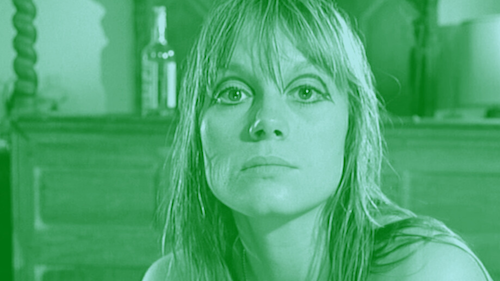
Where What? suffered due to its extreme ineptitude and inability to read the room, the earlier film, Cul-de-sac, triumphs as a minimalist look at inherently evil people within the confines of a limited setting. While actually being darkly entertaining and fascinating (without coming across as a try-hard, failed experiment), Cul-de-sac places us in the company of criminals trying to sort their lives out. We are led into uncomfortable mindsets via uncompromised scenarios, as if Cul-de-sac is a screwball comedy from another dimension and we are left wondering how to feel about what we are witnessing. Considering that Polanski was quite hit-or-miss when being able to blur the lines between effectively dangerous cinema and painful attempts at being taboo, Cul-de-sac is certainly an early success that proves that, with enough restraint and care, Polanski can make an extreme film without going overboard; I feel like he was wiser with his direction earlier in his career, mind you.
6. Knife in the Water
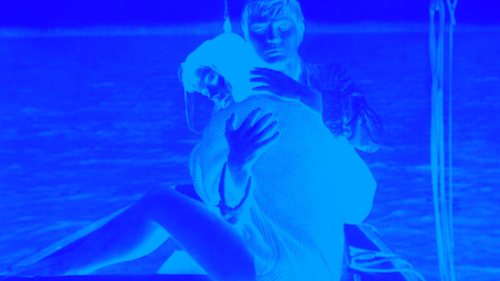
If you want to discuss glowing debut films, you must consider Knife in the Water: one of the greatest Polish films in the history of cinema. In the same way that Carnage places us in the claustrophobic confines of a limited setting with few characters and their hidden agendas, Knife in the Water has much higher stakes and psychological twists; here, we are stuck in the middle of the lake with a young stranger and a complicated couple. Tensions quickly rise, but — for much of the film — there is nowhere to go; Knife in the Water uses its inability for escapism to cause psyches to burst and for darkest fears to come — or appear — true. This is a highly inventive look at toxic daydreaming and narcissistic loathing, and a creative approach by a newcomer filmmaker who wanted to prove that he had much to show; while a couple of Polanski’s films do not contain this same amount of passion, at least most of his career has as much of a drive to tell compelling stories.

5. Tess
An artist sometimes delivers their best work when they are working against what they know best. Considering that Polanski is known for disturbing, twisted, haunting horror and thriller films, there’s something humbling about Tess, knowing that this gorgeous costume drama is amongst his greatest triumphs. Made adoringly as an homage to his late wife, Sharon Tate (who, alongside their unborn child [who Tate was carrying], and Tate’s friends Abigail Folger, Jay Sebring, and Wojciech Frykowski, were all murdered by the Manson family), Tess is an adaptation of one of the late actor’s favourite novels, written by Thomas Hardy; Tate wanted to play the titular role and expressed interest in her husband’s potential in adapting the film shortly before she was killed. Tess is instead played lovingly by Nastassja Kinski in a tenderly-made film about love and yearning, told via an artist who wants to use the cinematic medium to bring his loved one back (even if only through what she loved and how she viewed the world); ironically for a director who was always against the grain, Tess is the most — and best — atypical film for this unorthodox filmmaker.
4. Repulsion
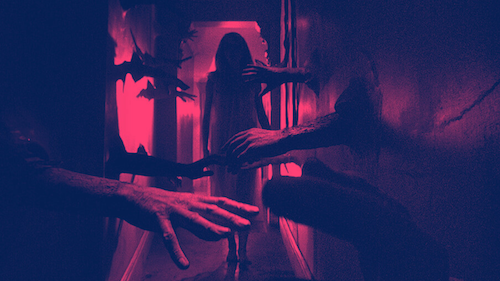
Polanski’s first outright horror film is Repulsion: an enigmatic look at mental illness, objectification, and the terrors of confinement. Told via a surreal, broken linearity, Repulsion leaves us to pick up the pieces of a tortured soul and her nightly occurrences; it’s only telling that her visions get stranger and stranger. When I said that Polanski was working with what he had with Knife in the Water, I want to apply that same logic here, where Repulsion is an even stronger example of inherent storytelling prowess driving a film and its concept to extreme highs; all we have is a lone woman, her apartment, and her nightmares coming to life. Our fears will tell a majority of the story sometimes; say we are enclosed within darkness and we swear we see something move when it’s just our imagination. Repulsion is that notion brought to horrifying fruition: a horror film that gets embedded within our minds for the rest of our lives, and one that plays out as if we never actually watched the film at all (we merely dreamed about it).
3. The Pianist
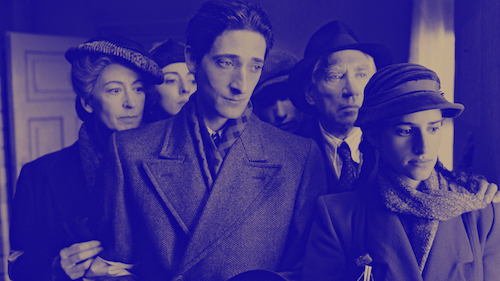
Winner of the Palme d’Or and a major contender for Best Picture at the Academy Awards (where Chicago won, which I consider a significant snub; Polanski did win Best Director, though), The Pianist has only aged better with time (even if the filmmaker attached to the film hasn’t). This Holocaust drama about survivor and musician Władysław Szpilman (played magnificently by Adrien Brody with one of the greatest and most dedicated performances of the twenty-first century) is not your typical biographical picture that is only interested in the surface-level details. Instead, The Pianist grabs onto the many tribulations Szpilman experienced while fleeing the Nazi occupation of Poland. Polanski himself escaped Kraków at a young age; his parents were kidnapped, and his mother killed. That sensation of helplessness and the necessity to hang on are always present in this punishing drama that is heavily rooted in real anguish (reality can often be stranger or worse than fiction). Considering that Polanski is a strong auteur within the horror and thriller genres, it’s telling that one of his finest films, The Pianist, is the depiction of some of the greatest atrocities in all of history through one persevering spirit hobbling through one of the most devastating backdrops in contemporary cinema.
2. Rosemary’s Baby
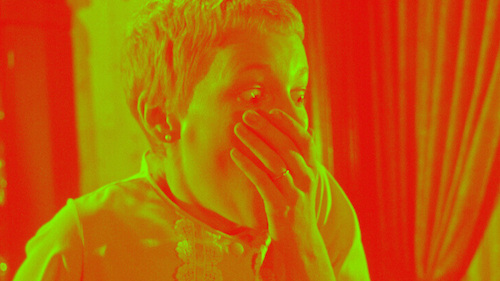
The greatest horror film Polanski ever made — and one of the top films in the genre’s history — is Rosemary’s Baby. Many horror films are masterful at making us scared of things that aren’t meant to be terrifying. Psycho made motels and showers untrustworthy. A Nightmare on Elm Street had us afraid to go back to sleep ever again. Rosemary’s Baby goes fifty steps ahead with this notion. As we follow a young married couple and their new life in a Manhattan apartment, instead of seeing the honeymoon phase of blossoming love; we witness a life of torture against one’s control. There isn’t much scarier than seeing Rosemary’s baby be born (well, how it was conceived may be a whole new level of terror), and the aftermath — one that is meant to be a celebration (the creation of life — becomes the ultimate jump scare. Rosemary’s Baby takes one’s home, body, and child the ultimate wells of fear, creating a dread surrounding major milestones of adulthood in a way that doesn’t soothe apprehensive people trying to make something of their lives: it only makes matters worse in unforgettable ways.
1. Chinatown
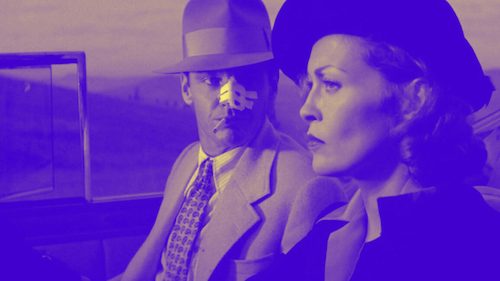
When I mentioned that The Palace is one of the worst films made by an iconic filmmaker that I have ever seen, I was aware of the other side of that coin known as Chinatown: perhaps the greatest American film ever made. This revolutionary neo-noir masterpiece is a brilliant exercise in mystery, the revelation of information, and the unearthing of abysmal truths. The film uses a shadowy past of regret to paint an ambiguous picture: one without certainty surrounding private investigator J. J. Gittes. Many films noir were rooted in the histories of their protagonists as they reflected on the mistakes that they made in retrospect; Gittes is frozen in a horrific present, which blends both his provenance of pain and an ongoing crisis that is promising to repeat the terrors of yesteryear. He cannot recieve that grief twice. As he tries to help Evelyn Mulwray with her investigation (a task that is already far more duplicitous and surprising than expected), he is not only learning more about the daughter of a mogul and the wife of a deceased chief engineer; we are alerted to the crumbling, toxic infrastructure of Los Angeles on the brink of annihilation. The setting doesn’t just swallow our protagonist whole; it’s devouring itself, too.
I consider Chinatown to be the best written film of all time, and I think Robert Towne’s work is untouchable. Well, except for a slight caveat. Towne’s original ending for Chinatown is one of hope amidst absolute darkness: a happy ending that doesn’t push this New Hollywood film into uncharted territory (but, rather, in the confines of cinematic comfort and safety). It was Polanski’s idea to make Chinatown end even bleaker than the film already is: a cataclysmic statement on how there will always be a level lower than a perceived “rock bottom.” Chinatown as a location represents a past that cannot be shaken off; Gittes is told to forget it, but how can one shake off guilt, terminate trauma, or forget the ill hand that fate has played yet again? That is the curse of Chinatown: how evil prevails within our systems; our cities; our memories; our selves. It had to have the ending that it wound up bearing; it was an instance where Polanski’s insistence for cinematic hyperbole was essential, resulting in one of the great climaxes in all of cinema.
This film happens to be Roman Polanski’s masterpiece but, as stated before, some films are stronger than those who made them. I view Chinatown as a high point of the history of motion pictures, the zenith of American filmmaking, and a game changer for New Hollywood, noir, thriller, and mystery cinema. This is one of the greatest films I have ever seen in my life. Jack Nicholson and Faye Dunaway have never been better (particularly the latter, whose performance as Evelyn Mulwray I’d place amongst the very best in all of film history). John A. Alonzo’s cinematography ushered in films noir for a new age: one where lights and shadows coexist within colourful worlds as if we were still tethered to the grey scale miseries of noir’s past. Jerry Goldsmith’s score is like the jazz soundtrack from purgatory: a waltz with the ghosts of regret and yearning who walk amongst us as lost and directionless as the living.
I know I aimed to remain objective throughout this article, but I do feel the need to conclude with the reality of the situation with who I am writing about. There’s something fitting about this being Polanski’s final American film, seeing as he fled the country after he was allegedly to serve fifty years in prison for his sexual abuse of a minor (he was originally promised a plea deal by the judge, only for the judge to apparently change his mind days before the verdict was to be revealed). He, like Gittes, has to answer for what he is responsible for for the rest of his life; the industry he just broke with Chinatown was no longer his to revolutionize directly due to his choices. As a means of dismissing this director as a person and ultimately separating him from his art (so much so that the film is almost detached from the predator who made it, thanks in part to the countless of other phenomenal artists attached), as a method of acknowledging that one of my Mount Rushmore, desert island films was directed by this problematic filmmaker and that I have to face this one blemish of its spotless legacy, and with the intention of honouring a masterpiece that is unequivocally untouchable to the point of surpassing the auteur behind the camera, all I have left to say is “forget it, it’s Chinatown.”


Andreas Babiolakis has a Masters degree in Film and Photography Preservation and Collections Management from Ryerson University, as well as a Bachelors degree in Cinema Studies from York University. His favourite times of year are the Criterion Collection flash sales and the annual Toronto International Film Festival.