
This Week in Cinema, I Learned…Jan 21-27 2024
Written by Cameron Geiser

Welcome to This Week in Cinema, a yearlong film criticism project wherein I will be watching a new film that I haven't seen every single day.
Love triangles can be a painful way to learn something about yourself and others, and this week’s films are chock full of alluring agony. Each film contains characters who struggle mentally, physically, or emotionally in the pursuit of love. Though, to be fair, John Woo’s A Better Tomorrow has its focus on familial love rather than romantic love as is the case with every other film. Éric Rohmer’s Claire’s Knee and Love in The Afternoon, being the final two films in his series The Six Moral Tales, are explicitly about love triangles involving men and their sordid temptations when another woman enters their lives- flirting with disaster quite literally in some ways. Past Lives also directly touches on a story about the mystifying connections between people and what could have been. While John Cassavetes’ A Woman Under the Influence examines an unstable relationship that waxes and wanes with each partners’ own idiosyncrasies while also harboring some sexual infidelity as well. Charlie Chaplin’s City Lights and Akira Kurosawa’s Red Beard include these notions too, though to a lesser degree. City Lights follows Chaplin’s infamous character, the Tramp, as he falls in love with a blind woman amidst his escapades around the city. Whereas Kurosawa's Red Beard focuses on a rural clinic (during the 19th century) wherein a young Doctor must learn humility- though here the devastating love triangle belongs to a tertiary character whose achingly sad tale completely takes center stage for fifteen or twenty minutes. It is so overpowering that you're almost jarred by the return to Red Beard and the young Doctor’s story. This week's films were equal parts devastating and nourishing, life is a mystery, but love is a phenomenon.
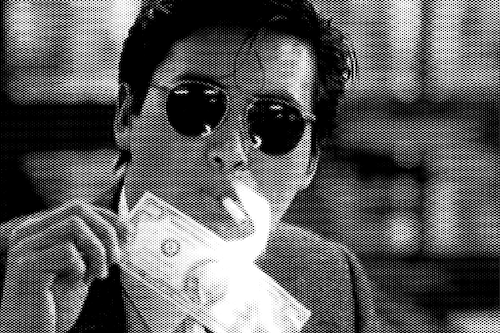
January 21st
A Better Tomorrow (1986)
4/5
The film that catapulted filmmaker John Woo and star Chow Yun-fat to international fame in the 1980s was a delightful surprise! Having only seen a handful of Woo’s work I tend to expect the insane visual action with larger-than-life characters like those in Hard Boiled or Face/Off but not here. There are shades of what's to come in his career sprinkled throughout this film, but this story isn't focused on heightened action or overindulgence. This is a crime epic. Like with Hard Boiled, the narrative’s structure is immediately apparent to anyone familiar with genre crime films, but A Better Tomorrow feels closer to The Godfather or The Departed than the action films of its era like Arnold Schwarzenegger's Commando or Sylvester Stallone's Rambo: First Blood Part II. It's a story of two brothers in Hong Kong, one is wrapped up in the criminal underworld and ends up in prison but takes great effort to stay out of the game once released. The younger brother goes into the police force and blames his brother for the death of their father, he then doggedly pursues the crime boss that has ruined everyone's lives. Though the standout scene-stealing character is Chow Yun-fat's Mark, best friend of the older brother who has several dual pistol-wielding action scenes that set the stage for Woo’s later refinement of this image throughout his career. While A Better Tomorrow isn't as stylized or as slick as Hard Boiled, it is narratively richer, which is why it has earned the same score.
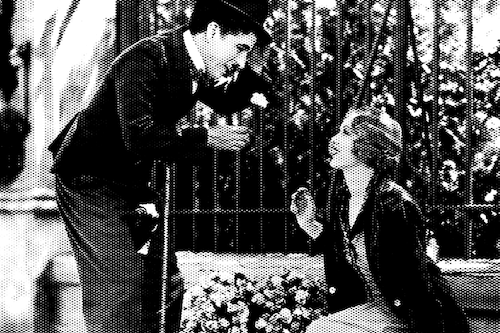
January 22nd
City Lights (1931)
4/5
Of all the Silent Giants in Cinema's past, I've taken a liking to Charlie Chaplin's films the most so far. City Lights continues that trend for me. Truthfully I haven't seen as many Buster Keaton, or the often ignored Harold Loyd, films- and while I've appreciated their work, there's something special about Chaplin's approach. His characters (though almost always a variant of the Tramp) are outsiders, they are more physically expressive, and there's a striking madness in his eyes that feels more akin to a Looney Tunes, or more appropriately, a Tex Avery cartoon from the following decades. As expected, the visual comedy is as inventive and entertaining as ever, but one thing I noticed right away was how few dialogue cards this film uses as compared to the more talkative Keaton films of the time. There's a lot of restraint in what is depicted through dialogue, Chaplin seems dialled in on telling his story as visually as possible. The film even opens with a comedic burn against dialogue during a statue reveal with several political speeches where the dribble that leaves the speakers' mouths sounds like garbled animal noises. Nice touch.
Chaplin's Tramp embarks on several interwoven storylines where he is only able to connect with people who cannot see him. He saves the life of a drunken and suicidal Millionaire who never recognizes him once sober, and he also falls for a blind woman selling flowers on the street. The whole film is stacked with some of Chaplin's great scenes of physical comedy, but the highlight is when he enters a boxing match in order to get the money needed for the blind woman's surgery to restore her eyesight. It's a great film, one of those that I definitely should have seen by now, but one that I heartily recommend!
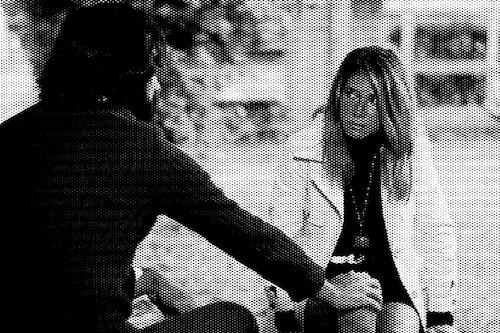
January 23rd
Claire’s Knee (1970)
2.5/5
Of all the films in Eric Rohmer's Six Moral Tales, so far, this is where I depart from the filmmaker. I will continue to seek out his films, but this one did not sit well with me. I'll tell you what I liked about it first though. I quite enjoyed the cinematography, the color grading, and the pastel cards for the time jumps as the film takes place over a summer. The performances are also quite good! I was also fascinated by Aurora (Aurora Cornu) as a character initially. She feels like the most fully realized female character so far in the series. She's a writer staying with a family in rural France near the Swiss Alps, and a former acquaintance and probable past lover of our lead male character, Jerome (Jean-Claude Brialy). He has come back to France to sell the Villa his family used to vacation in on the expansive lake set against the backdrop of mountains and forests. As he reconnects with Aurora he also tells her of his fiance Lucinda waiting for him in Switzerland whom he intends to marry at the end of the summer. The family that Aurora is staying with has two teenage girls who quickly become the focus of the story, Laura (Beatrice Romand) and Claire (Laurence De Monaghan), though Claire doesn't enter the story until about halfway through the runtime. Jerome is just as self-deluded as Rohmer's past male characters, but this film feels more possessive and leering with respect to Laura and Claire than his previous films. Seeking
inspiration for her latest novel, Aurora suggests that Jerome entertain the idea of seducing the young girls, Laura initially, and organically, falls for Jerome but once her older sister arrives his eyes become fixated on Claire- and her knee specifically. To be fair Jerome doesn't actually physically pursue the girls but platonically allows Laura to be infatuated with him. Claire has no interest in him as she has a boyfriend at the time, though Jerome becomes obsessed with touching her knee, which does happen during a particularly uncomfortable scene of emotional manipulation in my opinion. I've read many reviews since watching this film to understand the allure of this one, but it just isn't for me. Maybe I'm not culturally in tune with the themes and ideas at play, but this one just seemed like two adults pushing each other further in their own pursuits of younger sexual partners. Aurora even describes her own recent sexual outings with several young men at one point- It just seems a bit too creepy for me.
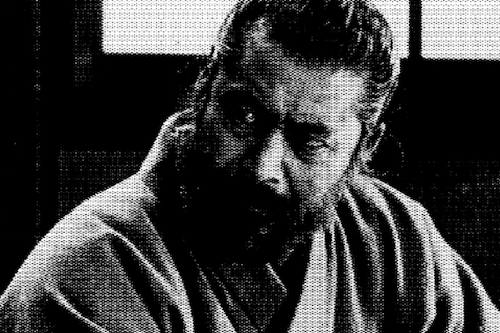
January 24th
Red Beard (1965)
4/5
Having seen the majority of Akira Kurosawa's films by now I've finally gotten around to the last collaboration between Kurosawa and Toshiro Mifune, possibly the greatest actor of the twentieth century. Knowing nothing about the film, I dove right in. Half expecting another Samurai flick starring Mifune, I was immediately struck by the realization that this story was a medical drama about a rural clinic in 19th century Japan. I was also surprised to see that despite starring as the titular Red Beard, Mifune wasn't the main character either! No, that role belongs to Dr. Noboru Yasumoto (Yûzô Kayama), the skilled young Doctor who is unknowingly sent to Red Beard's clinic to study under the strict guidelines of Red Beard himself. Noboru is extremely upset by what he sees as betrayal, he had assumed he was going to go on to become the Shogun's personal doctor, not to be the understudy of a poor farming community.
While I'm not entirely sure if the film needed to have a runtime of over three hours- it certainly didn't waste any of that time. Akira Kurosawa was a fascinating filmmaker who usually seemed to fall into two major tones for his films. Either explosively large characters and events take center stage to depict a Macro concern to the people of Japan through Kurosawa's eyes like Seven Samurai or High and Low, or the films are about smaller-scale stories that have a huge impact and become universal to the human experience like with Rashomon or Ikiru. This film falls into the latter category and it's the most humanist story he has told- with the exception of Ikiru (which you absolutely must see at some point in your life). With the possible exception of I Live in Fear, this may be the film that is most concerned with death more broadly. Ikiru after all may be about the fear of not having lived before your time is up, but it isn't about the moments preceding death like Red Beard is.
The relationship between Noboru and Red Beard (the real character's name is Dr. Niide) is the crux of the film as the young Doctor slowly realizes the value of Red Beard's ways. Red Beard has an unconventional style of medicine and healing people, viewing the mental and emotional as important as the physical. He doesn't come out and directly say this, but it is through his actions and tests that he doles out to Noboru over time that reveal his tactics. As mentioned in the opening, there is indeed a love triangle in the movie that belongs to one of the patients. It's a great story that gives the major players a breather in the second act, but it's also evocative of the fact that the film is more of an ensemble than anything else. I could go on and on, but this one was emotionally powerful, and a compelling reminder that life is fleeting. Go out there, learn something, and not just for yourself.
January 25th
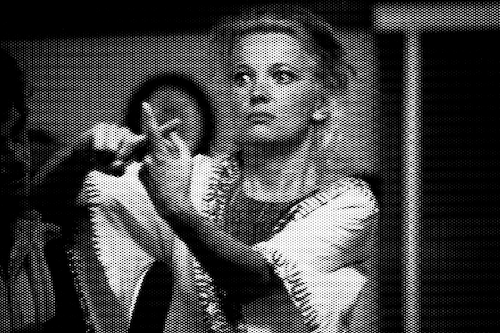
A Woman Under the Influence (1974)
4/5
Before watching A Woman Under the Influence the only other John Cassavetes' film I'd seen was The Killing of a Chinese Bookie. Personally, I found that movie to be an awful waste of time. It felt unfinished, it had no score, the plot was listless and the characters were uninteresting. Since then I've seen many articles extolling the virtues of Cassavetes' work in the American independent filmmaking scene, therefore I had to give him another shot. I am so very glad that I did because this film is bananas in the best of ways.
Admittedly, I must give a trigger warning here as this film IS difficult to watch at times, but it's also eerily mesmerizing. The film is about Mabel (Gena Rowlands) and Nick (Peter Falk), a husband and wife with kids at home who live in a working-class neighbourhood with all the baggage that comes with unchecked mental illnesses. The film is split into two halves, both are explicitly about Mabel, her departure and eventual return to her family. This is a film obsessed with these characters' anxieties and their incredibly loose grip on reality. Everything about the film seems designed to animate these characters to their breaking points. Nick is a construction foreman often out on long days in the field and in the opening of the film he has to work through the night and misses a long-planned night away from the kids with Mabel. When he phones her to tell her that he'll be home in the morning, Mabel gets drunk and angry and goes to a bar and drags home the first guy she meets. When Nick and his coworkers all arrive in an unplanned manner for a communal meal, it results in one of the stranger yet more fascinating scenes of the film where several construction workers reveal that not only do they know Opera, they can sing it beautifully in Italian.
Things eventually come to a conflict during the scene when Nick finally calls a Doctor to assess if Mabel needs to be institutionalized. During the height of the scene, the filmmaking changes abruptly, the scene is edited entirely differently from the rest of the film. Insert shots, wholly different angles and camera movement that appropriately make the scene as important and powerful as it needs to be. The second half of the film is six months later with Nick preparing for Mabel's return home. It's in these scenes where Nick's neuroses become very apparent. He picks up his kids in the back of a ramshackle wooden pallet truck and later rides in the back with them and casually lets the kids (all under the age of ten) drink some beer. The third act is just as explosive if not more than before Mabel was institutionalized, once the slapping, screaming, and running up and down the stairs has tired all the characters out, Nick and Mabel quietly recognize that maybe their individual brand of crazy is just crazy enough to compliment each other's unique idiosyncrasies. If you can handle some intense family drama (trauma?), this one is worth a watch.

January 26th
Past Lives (2023)
5/5
Every once in a while you get a film that truly expresses something you know to be true to life so deeply that it transcends the medium. I don't like over-embellishing too much for a good film like this, lest I set expectations too high, but Past Lives does just that. The film opens with two unseen onlookers “people watching” at a bar in New York City. They're trying to guess what the relationships between three people across the way are. Two South Koreans, a man and a woman are talking directly to each other while a bookish white guy sits with them listening. Over the course of the film, we're also doing just that as time rewinds twenty-four years to South Korea.
Nora (Greta Lee), known as Na Young before she changes her name, and Hae Sung (Teo Yoo) are seen playing in a park in Seoul as their parents discuss Na Youngs upcoming emigration to Canada. Na Young and Hae Sung were close childhood friends and both had a hard time leaving each other in their new lives. The film fast forwards twelve years later shortly after Nora has moved to New York City as a playwright with Hae Sung finishing his Military Service, as is required of all young men in South Korea. Nora discovers that Hae Sung searched for her on Facebook but didn't find her due to her name change and they eventually link up over video chat. Things pick up for both of them and they strongly consider travelling to see each other but both have divergent lives that won't allow time for this. Nora eventually decides to move on as it feels more like a fantasy, they are both falling for each other in small subtle ways and before you know it Hae Sung moved to China for work and Nora went on a writers’ retreat in Montauk where she meets Arthur (John Magaro), the man she falls in love with and marries.
Fast forward another twelve years and the two reconnect once more before Hae Sung comes to New York for vacation. They meet up and reconnect, but the differences in each other and their lives have created a gulf between how they once were with each other. Arthur wants to meet Hae Sung as well before he departs and thus we end up at the opening scene at a bar at 4:00 am in Manhattan. The narrative of the film is all well and good, but it's in the execution of the direction, cinematography, and dialogue where the film shines brightest. I was consistently in muted awe of the Cinematography, particularly the camera placement and angles that all feel like the camera is watching the characters from afar. This isn’t always true, but it points to a broader attempt through these choices, in the lighting and color grading especially, everything accentuates the narrative elements without overshadowing them. I also loved the “pillow shots” in Seoul and New York, Ozu would be proud. In fact, I must take note of how damn good the use of shadows was in this film! Brilliant! Just brilliant. Okay, that's enough gushing, check this one out, it's beautifully heart-wrenching.
January 27th
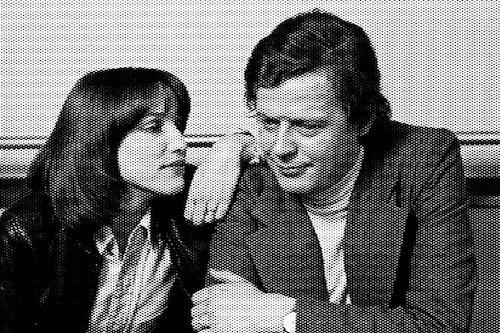
Love in the Afternoon (1972)
4/5
Now this is more like it. Eric Rohmer's final film in The Six Moral Tales is a pretty great wrap-up for the series. Love in the Afternoon (alternatively titled Chloe in The Afternoon) may be the most overtly literary of The Six Moral Tales, the lead character, Frederick (Bernard Verley) almost always has his head in books with lots of narration from his inner dialogue. He's also seemingly the most at ease and collected of all the male characters of the series. However, he does harbor a childish fantasy, which he acknowledges, where he uses an amulet to seduce any woman he sees on the street. It's a short scene, but it mostly exists as a reason to have every female actress from The Six Moral Tales represent the various female idiosyncrasies that have plagued the previous male characters. As he describes them, each one relates somewhat to their previous characters, but not directly. He lists them off quickly; “Indifferent (Françoise Fabian), Hurried (Béatrice Romand), Hesitant (Marie-Christine Barrault), Busy (Haydée Politoff), Accompanied (Laurence de Monaghan), and Alone (Aurora Cornu)”.
Frederick lives in the suburbs of Paris with his pregnant wife (Françoise Verley) and first child while he commutes to Paris for work as a small-time lawyer. Abruptly one afternoon, Chloe (Zouzou), a former girlfriend of an old friend of Frederick's, shows up at his Parisian office looking for work, but also to reconnect now that she's back in France. Her presence seems fleeting initially but as time goes on they see more and more of each other, going for walks around the city, shopping occasionally, or just chatting about each other's life situations at his office- Chloe isn't just a new woman in his life, she's a force of nature. Chloe is far more aggressive and blunt with her lustful advances than all previous female characters. Even Maud was more coy in her seduction. As time goes on Frederick constantly reminds Chloe (and himself) that he truly does love his wife and family, and he's proud of it. This does not sway Chloe in the least as she eventually decides that Frederick would make an ideal partner to have a baby with. She doesn't want him to marry her, she wants a child and simply thinks Frederick would be the best candidate. This is after she reveals, matter of factly, that she actually does love him. This binds Frederick up internally, he even starts to look a little haggard in the third act from all of this sensual agony inflicted on him, as he doesn’t have it in him to blatantly reject her either. In the end, Frederick does make the moral choice at the last second and flees a naked Chloe to go home to his wife and children.
At this point what I will say about Rohmer's filmmaking is that he is very skilled in creating scenarios where we observe characters who either succeed or fail in maintaining their own moral compasses with regard to their relationships versus their overwhelming biological needs and how much cognitive dissonance this creates. His stories aren't meant to be taken at face value, they're not validating the experiences of the characters as much as Rohmer is simply observing errant behavior in his characters with a non-judgemental lens. His films are more emotional in nature and less about the actual plot at hand, and each film sees him continue to refine his skillset in intriguing ways. While Claire's Knee didn't connect with me, the rest of The Six Moral Tales did and I will continue to seek his films out to see how he evolved as a filmmaker over time.


Cameron Geiser is an avid consumer of films and books about filmmakers. He'll watch any film at least once, and can usually be spotted at the annual Traverse City Film Festival in Northern Michigan. He also writes about film over at www.spacecortezwrites.com.